
Architect explains...
An architect whose YouTube channel I found helpful for home design ideas.

Last week the YouTube algorithm showed me a video from the YouTube channel of Daniel Titchener, a UK and Canada registered architect. I like the content and subscribe to his channel, which has over 58 million views.
Below are descriptions of two of his videos that I watched.
Timeless design:
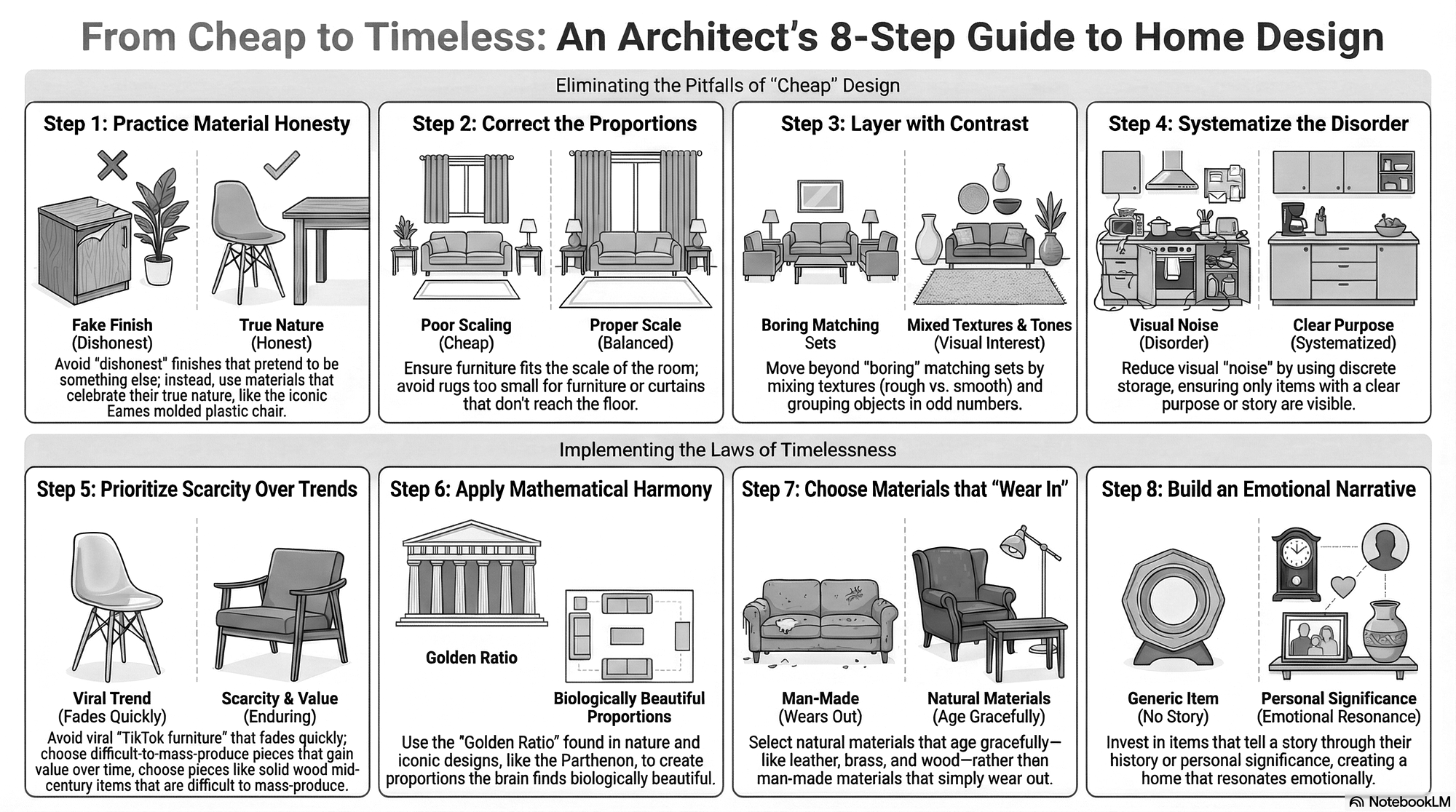
Daniel states that true timelessness comes from scarcity and quality, visual harmony rooted in nature, and emotional connection through storytelling.
The 3 Laws of Timeless Homes:
- Chasing Trends Kills Timelessness: Items that skyrocket in popularity quickly become dated. To achieve a timeless look, focus on durable, scarce, and functional pieces rather than viral furniture. Quality materials like solid wood endure, whereas trendy items are discarded quickly.
- Harmonious Proportions Inspired by Nature: Timeless design often unconsciously follows the Fibonacci sequence and the golden ratio, which are found throughout nature. These proportions feel inherently right to us. Furthermore, timeless materials wear in, not out, aging naturally like leather, brass, and wood.
- Objects Must Tell a Story: Timeless products evoke emotional desire rather than logical utility. They gather "soul" by being part of real lives and histories over time. Thrifting or purchasing design classics helps build a narrative in your home.
Cheap looking homes:
Daniel Titchener explains that a home feeling "cheap" has nothing to do with price, but rather with violating four core principles he calls the Four Ds.
The Four Laws of Cheap-Looking Homes:
- Dishonesty: This occurs when materials try to be something they are not (e.g., fake plants, wood-effect laminate). Honest materials feel premium, even if they aren't expensive, like the molded plastic of an Eames chair. The rule is: if you are going to fake a material, it must be done well enough that it isn't immediately obvious.
- Disproportion: This is about poor scale, such as curtains that don't reach the floor or a rug that is too small for the furniture it is meant to anchor. Furniture should fit a room like clothing fits a person. While exaggerated scale can work, it must be intentional, not accidental.
- Deficiency: This happens when a space is lifeless or boring because everything matches too perfectly. The fix is not clutter, but layers of contrast in color, texture, and light. A good rule of thumb is to group objects in groups of three or other odd numbers to create visual interest.
- Disorder: A restless space with too much to look at. The key to premium design is abundance of discrete storage to hide clutter and only displaying items that have purpose or value. It is about creating rhythm, not noise.
As an ex-architect these types of videos resonate with me and I plan to share more in the coming months.