
Disenchantment with AI

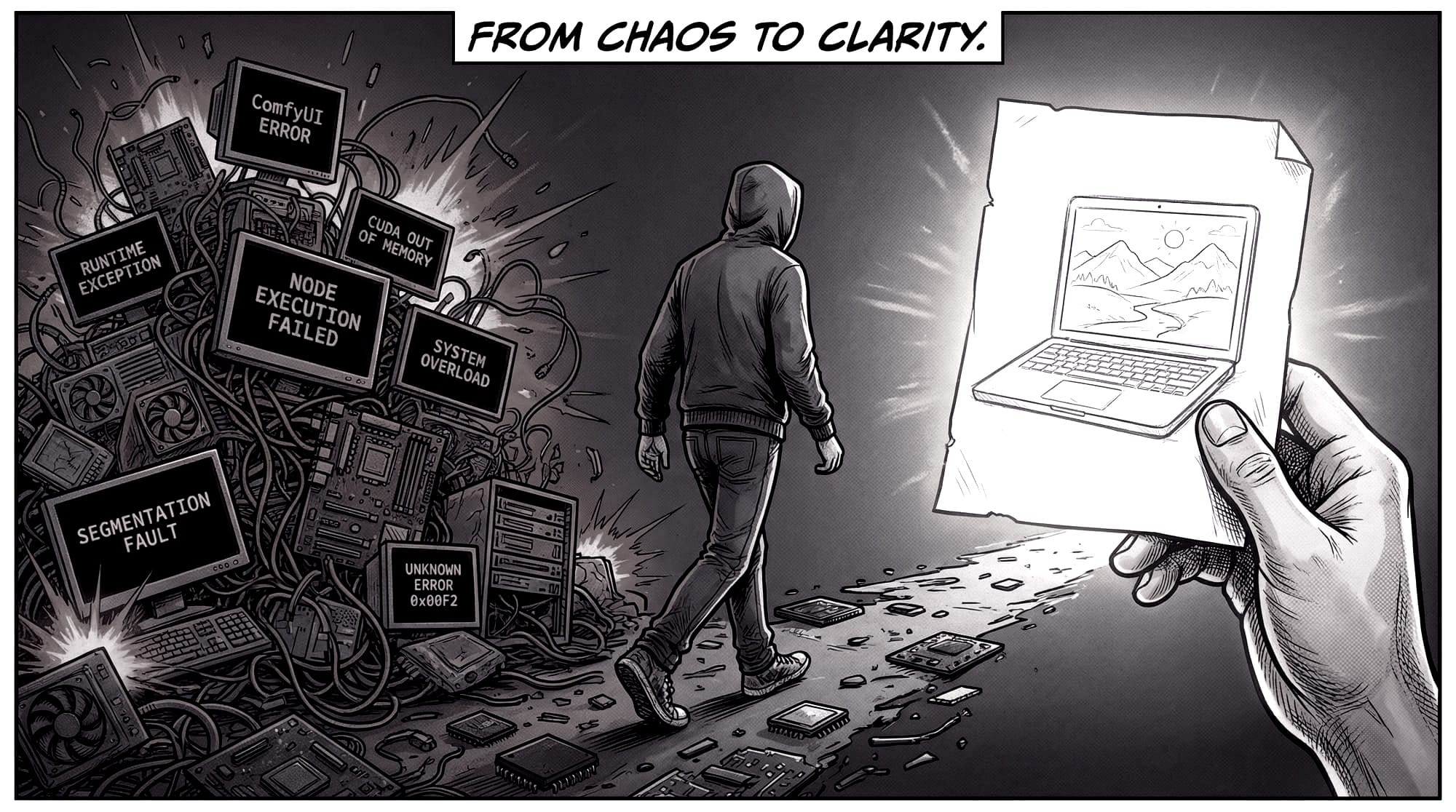
Why I quit my favorite AI Discord community
I have already previously mentioned about AI slop, the impact of data centers, and the enormous AI energy requirements.
Bernie Sanders explains AI is probably benefiting the billionaires, not the average person
Jim Rohn "You are the average of the five people you spend the most time with"
Other than a few exceptions, the average person on the Pixaroma Discord is not who I want to spend most my free time with.
My disenchantment didn't happen overnight. It was a slow burn.
Pixaroma discord has 70,000 members, but only a minute fraction actually contributes anything of value.
I had suggested to the founder, Ioan, that we implement a "1-2-3 rule"—similar to the wildly successful iPhone photography Facebook group where for every photo you post, you have to comment on two and “like” three others. He didn’t want to impose more rules.
The result? A digital space filled with self-centered posting. Many members seem to be "freeloaders" seeking free workflows or tech help, disappearing the moment they get what they want. It’s a stark contrast to what I felt a real community should be. There was little interest in building each other up;
Ioan is an optimist much like Dr. Ashish Bamania. Only one in 7 visitors have paid anything, and they have only paid 80cents on average, on a site where Dr. Bamania’s other ebooks products are priced at $25 or higher https://bamaniaashish.gumroad.com/
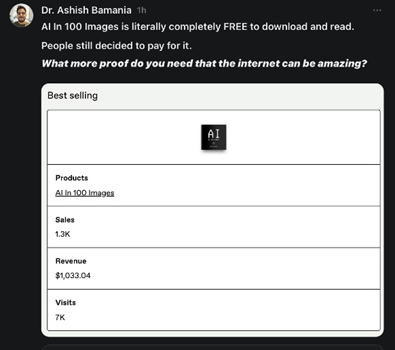
Giving educational content away for free could certainly attract a lot of traffic and become a valuable business model, like the success of Khan Academy. But I think that is an outlier.
Another Concern for me
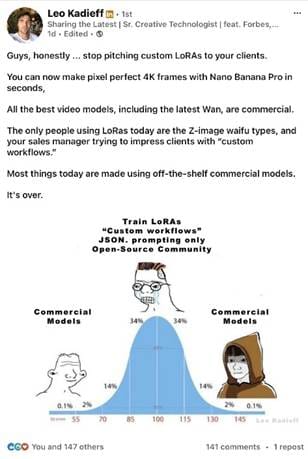
Leo Kadieff LinkedIn post ( maybe “Rage Bait”, the Oxford word of the year for 2025) was another catalyst why I quit Pixaroma Discord, where I had spent a LOT of my free time in wee hours of the morning over the past 1-1/2 years.
1) Quite a number of people I've seen on the Discord are asking how to create pretty faces or NSFW images, and these NSFW posts seem sprout up like “whack a mole” if caught and banned by moderators.
2) Much of ComfyUI itself is becoming unnecessary for people who don’t relish “DIY or under the hood” work, as Off-the-shelf commercial models are superior now. Nano Banana Pro for example easily does majority of artwork I can envision, and without the aggravating ComfyUI errors that frequently pop up when different nodes are updated at different times, or abandoned entirely.
Scarcity and value. It’s unclear how the majority of people hope to profit from AI, or their investment in faster Nvidia GPU’s.
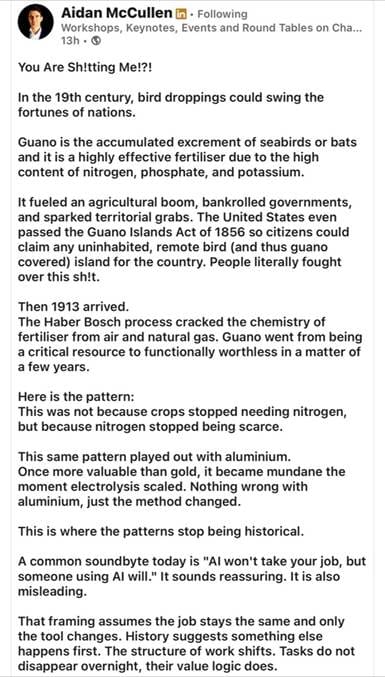
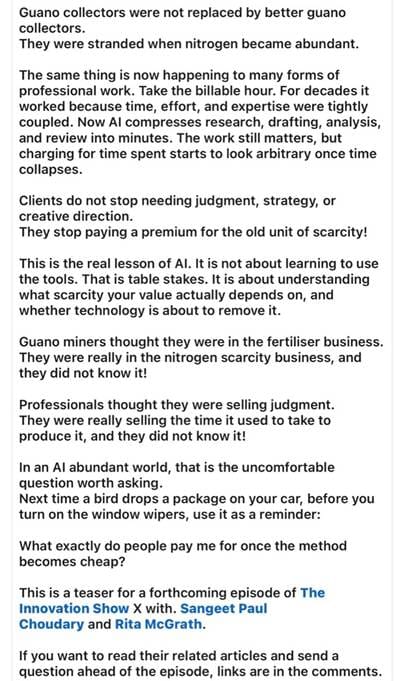
AI art, video, and music mirror the guano collapse described in the screenshots: “This was not because crops stopped needing nitrogen, but because nitrogen stopped being scarce.” Visuals, clips, and songs are still needed everywhere, but AI makes their production abundant. What once required rare skills, expensive tools, and long timelines is now generated in seconds. As a result, creators are not being replaced by “better creators,” just as “guano collectors were not replaced by better guano collectors.” They are stranded because the unit of scarcity vanished. Images, videos, and tracks did not lose usefulness; they lost pricing power.
The deeper problem is structural. As the post notes, “Tasks do not disappear overnight, their value logic does.” Artists believed they sold creativity; videographers believed they sold craft; musicians believed they sold musical judgment. In reality, much of the market paid for how long and how hard it was to produce the output. AI collapses that time. When anyone can generate polished art, cinematic clips, or full songs instantly, “clients stop paying a premium for the old unit of scarcity.”
The uncomfortable question becomes the same one posed in the screenshot, translated to creative work: what exactly are people paying for once the method becomes cheap?
By moving away from "freeloader" environments and focusing on spaces that value shared beliefs and actual interaction, I hope to protect my most valuable assets: my time and peace of mind.