
Sesame Street & Parklets

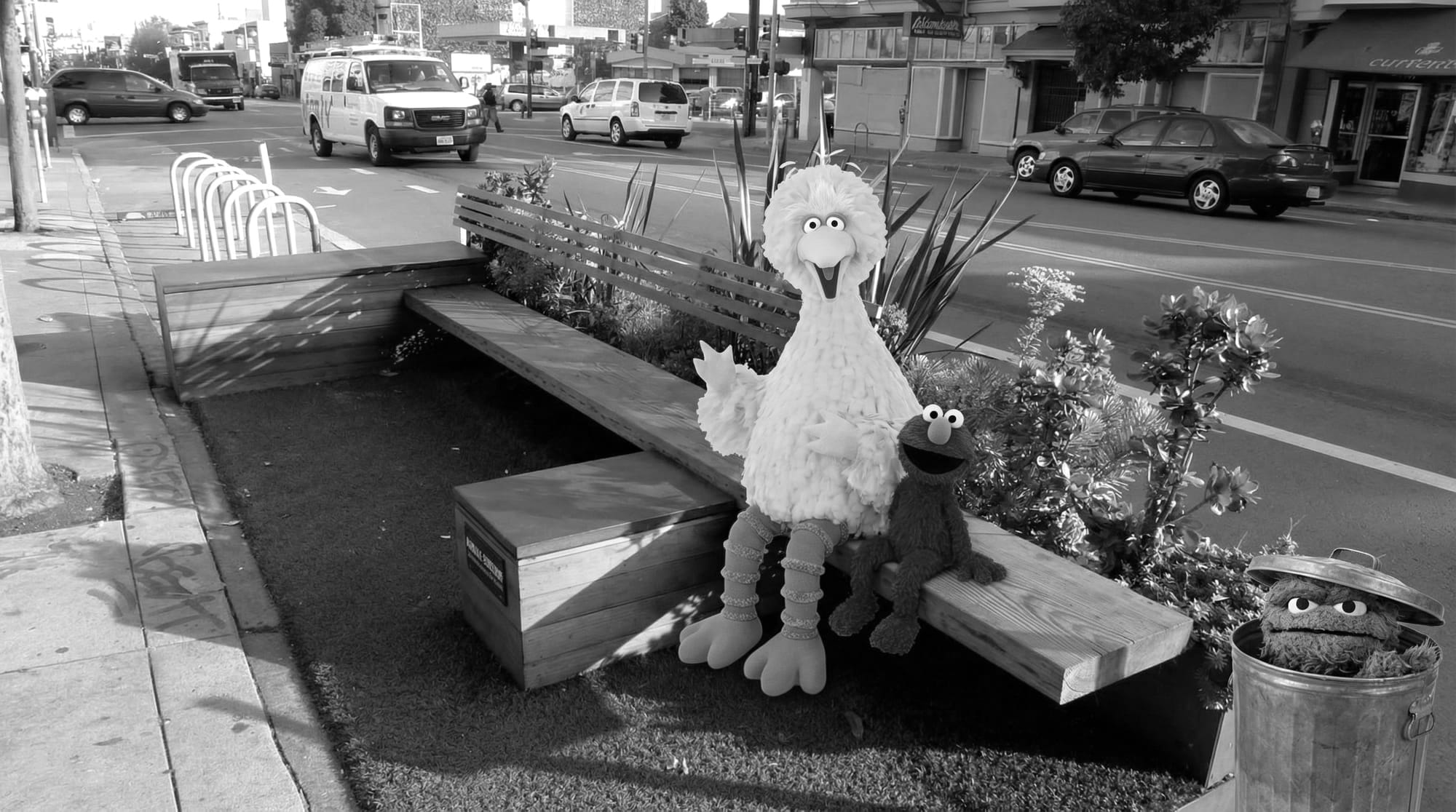
Sidewalk ballet
The YouTube algorithm showed me this video about the design of Sesame Street's set.
This explores how the show's set reflects the urban planning principles of Jane Jacobs, urban activist known for her book on the death and life of Great American cities.
According to the video, the design of Sesame Street's buildings follows these four key principles:
- Mixed Uses: The block includes a variety of functions like homes (123 Sesame Street), shops (Hooper's Store), and community spaces (the laundromat). This ensures the street is active at all times of day.
- Short Blocks and Density: The compact nature of the set creates a high density of people and more "corners," which encourages the frequent, spontaneous interactions known as the "sidewalk ballet".
- Mix of Old and New: The creators intentionally kept the set looking "authentic" with rough details like soot on the brownstones and trash on the street to resemble real New York neighborhoods. When the set was updated in the 90s, they kept the original brownstone to represent a "survivor of gentrification".
- The Stoop as a Stage: The steps of 123 Sesame Street serve as a vital transition point where the private home meets the public street, acting as a stage for community interaction.
Breaking the "Car Barrier"
For decades, the curb was a barrier—a line where the community ended and the traffic began. Sesame Street was the first to blur that line, showing us a world where the sidewalk was a place to stay, not just a place to pass through.
In 2005, the San Francisco parklet movement took that baton and ran with it, physically breaking the 'car barrier' to reclaim the street for people. Both are rooted in a simple, connective truth: when we prioritize places for people to sit together over places for cars to idle, the social fabric of a city doesn't just improve—it heals.
In London, my college friend (and newsletter subscriber) Brenda was instrumental in creating the People Parking Bay.
In New York City, I recall after the pandemic, temporary outdoor dining had become very popular. The city now bans fully enclosed sheds (the ones that looked like tiny houses) to fight the rat population and ensure better airflow. New designs must be "open-air," using umbrellas or retractable coverings instead of solid roofs. I agree with this direction because the enclosed eating spaces don't really have a connection with the street.
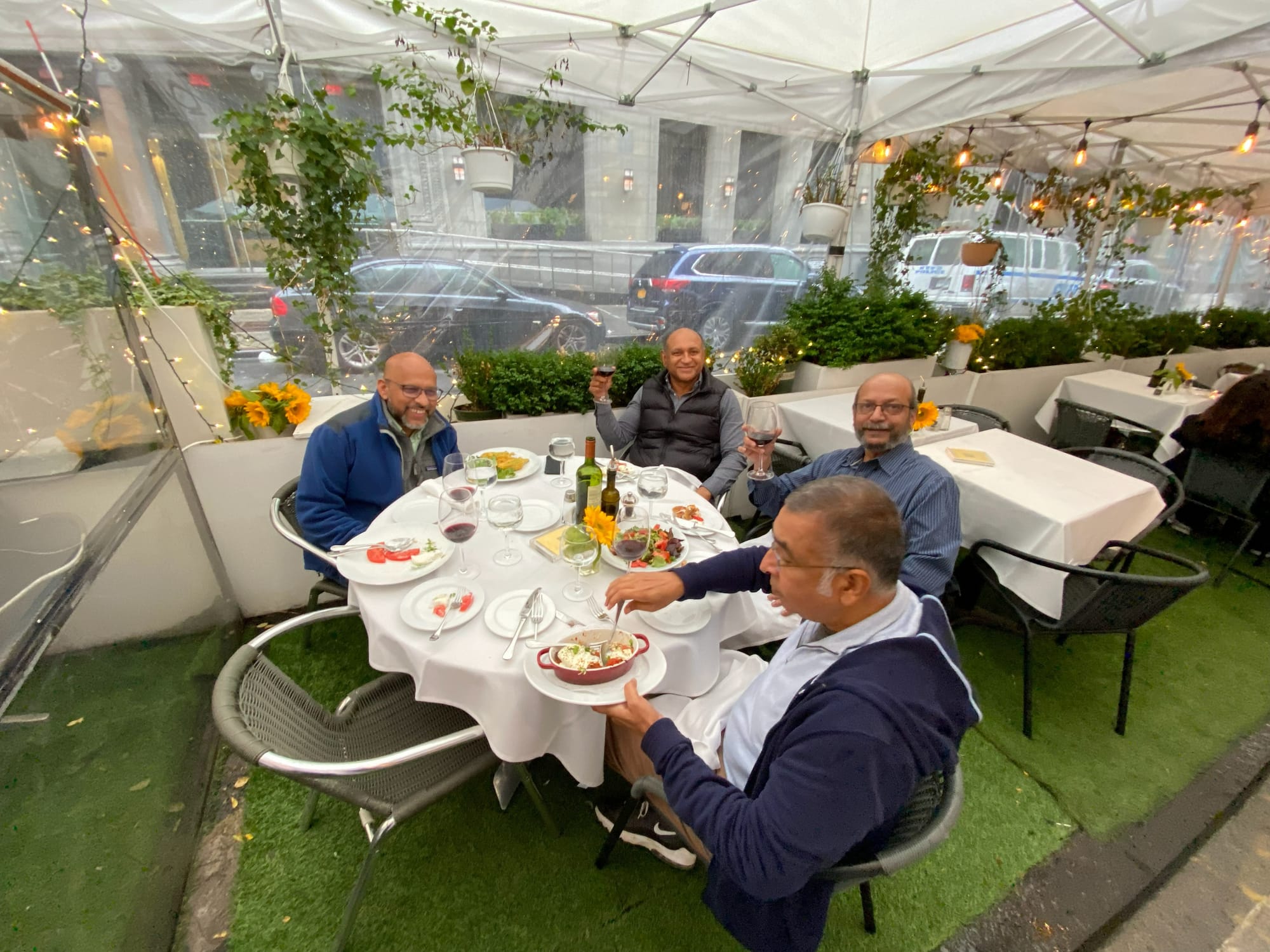
The Human Connection
We often build walls to feel safe, but as Jane Jacobs and the creators of Sesame Street understood, true safety and belonging come from the "eyes on the street." As we navigate a culture of digital "doom-scrolling" and social withdrawal, the parklet stands as a piece of essential human infrastructure.
It is a reminder that the most important thing we can build in 2026 isn't a faster connection to the cloud, but a shorter distance between two chairs.
By inviting the stranger back into our "living room," we rediscover the shared identity that social media so often strips away: that we are all just neighbors, looking for a place to sit and belong.