
Swarm intelligence
This post explains about Swarm Intelligence as displayed by ants.

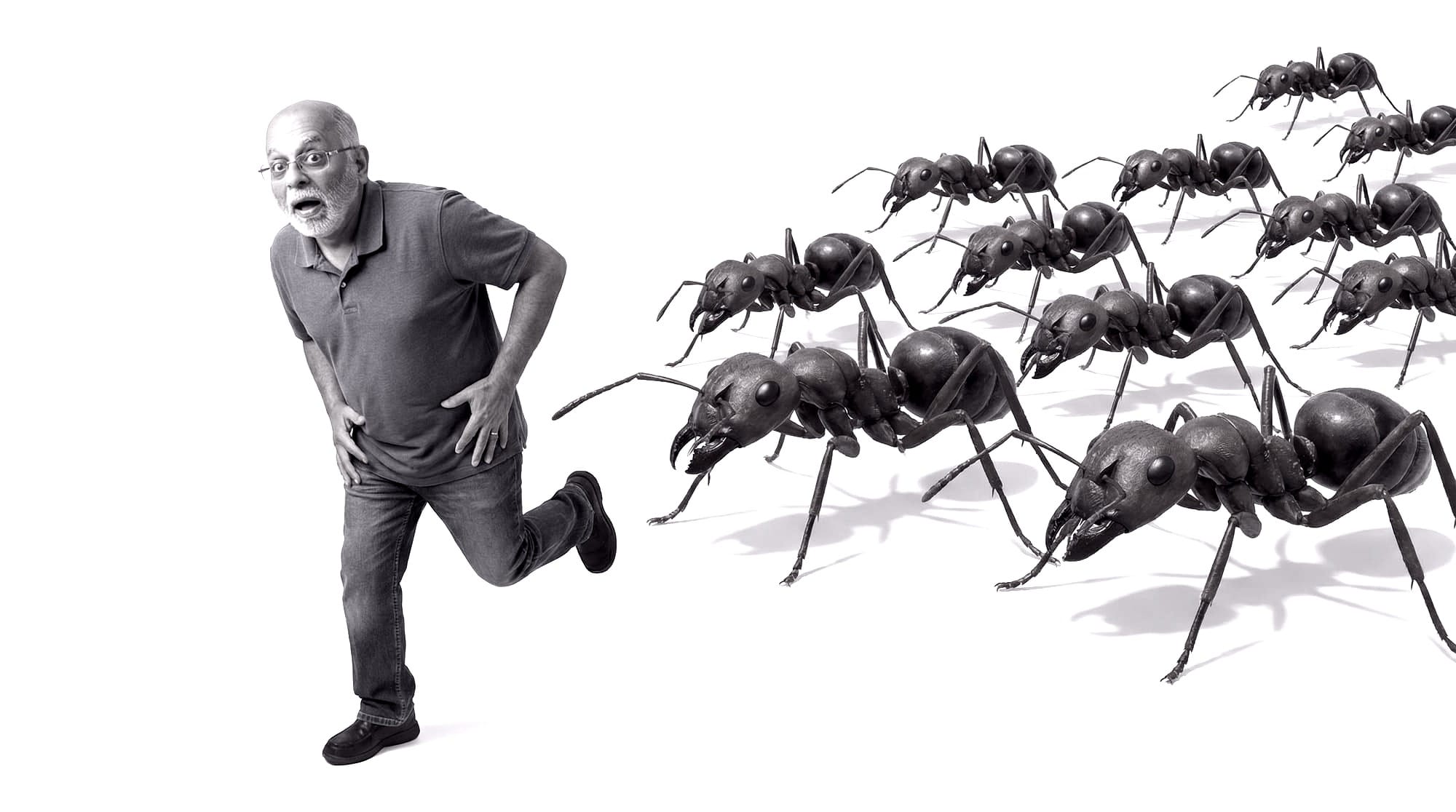
While 2024 was the year of the "Chatbot," 2025 of the "Agentic AI", now 2026 is being hailed as the year of the "Agentic Swarm."
We are moving from AI that talks to AI that acts.
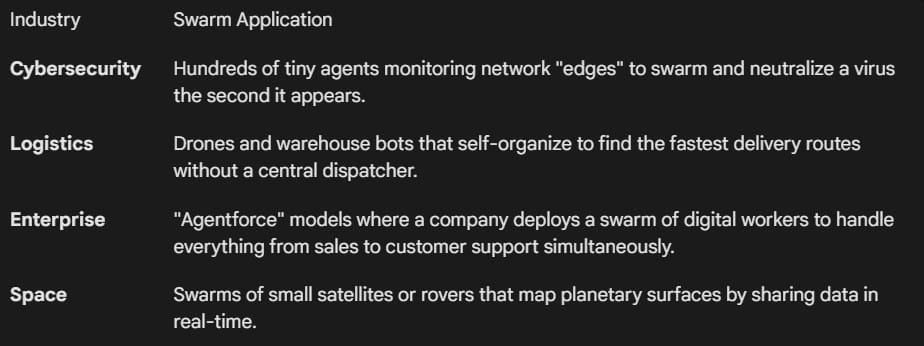
Swarm intelligence is a concept where a group of individuals, despite having limited individual intelligence, can collectively solve complex problems.
In the above video, concepts include:
- The Piano Movers Problem (0:30): Ants outperform humans in this puzzle. While individual humans are efficient, groups of humans struggle, whereas groups of ants become more efficient with more members (0:55).
- Super Efficiency in Weaver Ants (3:05): Unlike humans who slack off in groups (tug-of-war effect), weaver ants exhibit "super efficiency," where each ant contributes more in a group than it would alone (2:36).
- Army Ant Bridges (4:35): Army ants build intricate bridges with their bodies to cross obstacles. These bridges can even widen or narrow based on traffic, a feat human engineers haven't replicated (4:43).
- History of Swarm Intelligence Research (5:18): The video traces the understanding of collective intelligence from Aristotle's "political animals" to Francois Huber's 1700s experiments, which showed that hives aren't governed by a queen but by individual interactions (5:51).
- Defining Swarm Intelligence (6:39): If a group can solve a survival problem better than chance without a central leader, it exhibits swarm intelligence. Examples include geese flying in a V-shape (7:23) and fish schooling (7:37).
- Boids Simulation (8:41): Craig Reynolds' 1980s computer simulation, "Boids," demonstrated that complex flocking behavior in birds emerges from simple local rules about proximity, collision avoidance, and direction (9:32).
- Ant Bridge Rules (11:36): Scientists identified four simple rules ants follow to build bridges: slow down on rough terrain, walk on slowed ants, freeze when stepped on, and pause before moving when no longer stepped on (11:41).
- Applications of Swarm Intelligence (14:01): Understanding swarm intelligence is being applied to human problems, such as designing better traffic systems and self-assembling robotic conveyor belts (14:06).
- The Human Brain as Swarm Intelligence (14:21): The video concludes by suggesting that the human brain itself is a form of swarm intelligence, with individual neurons responding to local signals to create a larger intelligence (14:21).