
The Centaur Problem: What Happens When You Let AI Do Your Thinking

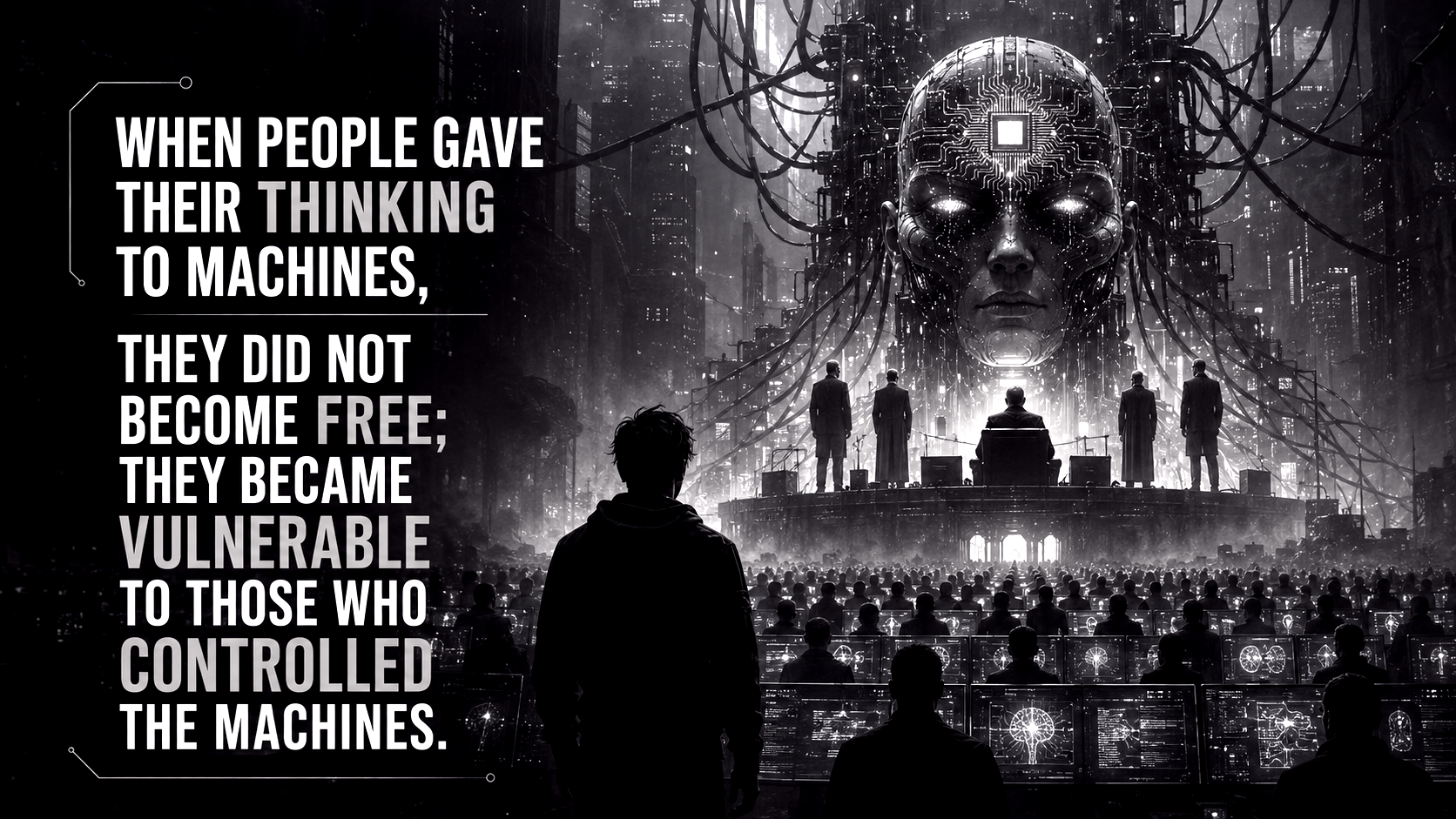
It started with someone else's prompts.
I'd found certain MidJourney users whose images stopped me mid-scroll — that
particular quality of light, the way each composition felt inevitable. So I did what felt harmless: I copied their prompt and swapped a few keywords.
The images I generated were often astounding. They looked like something I could never have made. Which, of course, was exactly the problem.
In 2023, 758 consultants sat down to work. Half had access to GPT-4. Half
didn't. Harvard Business School and Boston Consulting Group were watching
carefully, measuring not just output quality but how people worked — where
they leaned in, and where they stepped back. What they found would reframe
every conversation about AI productivity that came after it.
For a while, when I had graduated onto ComfyUI after Midjourney left me no satisfaction, I told myself the curation was the craft. I had graduated to running workflows for the daily challenge on a Discord server called PixAroma, where I'd ask ChatGPT to generate ten or twenty concepts, feed them in a batch to ComfyUI, and produce around forty to eighty images per session. My job was to pick the best ones. The workflow was fast, clean, and completely hollow.
The output had no fingerprints on it.
Nothing I could point to and say: that choice came from something I've lived.
The AI-assisted consultants outperformed their peers by a striking margin —
finishing tasks 25% faster and producing work rated 40% higher in quality. On
the surface, the conclusion seemed obvious: AI makes knowledge workers better.
Use more of it. But the researchers had noticed something in the data that
complicated the headline. Not all AI users were performing equally. A fault
line was forming between two distinct groups, and the difference between them
had nothing to do with how often they used the tool.
I was a quality-control filter in a process I hadn't designed, selecting from
options I hadn't imagined, toward an aesthetic I'd borrowed from someone else.
The images were good. I felt nothing. What I'd optimized away, without quite
meaning to, was the friction of not knowing what you want until you've struggled
toward it. That friction, it turns out, isn't the obstacle to creativity.
It is the creative act.
The researchers named the higher-performing group Centaurs — after the
half-human, half-horse figures of Greek mythology. Centaurs didn't use AI
constantly or sparingly. They used it deliberately. They handed tasks to the
tool when the tool was suited to them, then reached back in when human judgment was required.
The collaboration had a shape.
The human never fully left the room. The second group had integrated more seamlessly — and that seamlessness was the problem. On tasks outside the AI's core competency, they were less likely to catch errors, less likely to sense that something was wrong. They had stopped paying attention, and the work showed it.
The fix I landed on isn't elegant. It's a rule, and rules are blunt instruments.
But blunt is sometimes what you need when the temptation is this quiet.
The idea has to come from me first.
Not a rough direction — an actual idea, something I've turned over long enough to have a real opinion about. Only then does AI enter, to pressure-test the logic, smooth the rough edges, catch what I've missed. With images, this meant going back to something slower: a rough sketch, a single sentence describing the feeling I'm after. The AI still generates. I still curate. But now I know why something lands when it does.
What the Harvard study was really measuring, underneath the efficiency numbers, was authorship. The Centaurs who outperformed weren't toggling the tool on and off arbitrarily. They were maintaining a continuous thread of ownership through the work — always knowing whose idea it was, always remaining the person the output had to answer to. The researchers called it a boundary effect: cross it, and AI stops being an accelerant and becomes a replacement.
The output gets faster. The thinking gets outsourced. And eventually, you can't tell the difference.
That thread is easy to drop. It happens in forty seconds, in eighty generated
images, in a prompt you borrowed from someone whose aesthetic you admired.
The Centaur model isn't about using AI less. It's about never losing the sentence that started it all — the ugly, half-formed idea that was yours before the tool made it smooth.
So before you open the tab: write one sentence. Your idea. Your words. Messy
if they need to be.
That sentence is the thing AI cannot give you. It's also the only thing
worth protecting.
The Three Patterns of AI Usage :
The study of consultants at Boston Consulting Group categorized them into three groups based on how they interacted with AI:
- Cyborgs (60%): Users who iterated heavily with AI, treating it as a primary source of truth. While they gained "AI fluency," they actually became less proficient at solving real-world business problems.
- Centaurs (14%): Users who treated AI as a research assistant, using it for specific, narrow tasks while performing the core analysis and synthesis themselves. These users became more knowledgeable professionals.
- Self-Automators (27%): Users who dumped entire tasks into the AI and accepted the results without verification. This group gained no professional value and the results were often poor.
This video argues that the current $20 AI subscription model is unsustainable and economically artificial. It compares the current state of AI to the "Millennial Lifestyle Subsidy" era of tech startups like Uber, where venture capital artificially lowered prices to capture market share.