
The Diderot Effect Came for My Television
The problem with coveting a $2K TV stand. On Happiness and the Rat Race.

It started, as these things are wont to do, with something entirely reasonable.
We will need a TV stand. Not a want, a need — there is a television and there is a floor and something has to go in between.
Except that isn't what I set out to buy at all. What I originally wanted was a floating shelf. The wall-mounted kind — IKEA sells them, or you have one made to size — a single plank bracketed to the wall with nothing underneath it. No legs. No doors. No footprint.
So I did what I always do, which is far too much research. And somewhere in the middle of it, I stopped looking at shelves.
The thing I found is called the Arboren. It's 71 inches wide, mid-century modern, walnut. The slatted doors are designed so the sound and the infrared signal pass straight through, which is the kind of detail that tells you somebody who actually watches television was in the room when it was designed. The top holds 250 pounds. Six cable holes in the back. Adjustable LED lighting with six brightness levels and a remote. Assembly is the legs only, about five minutes.
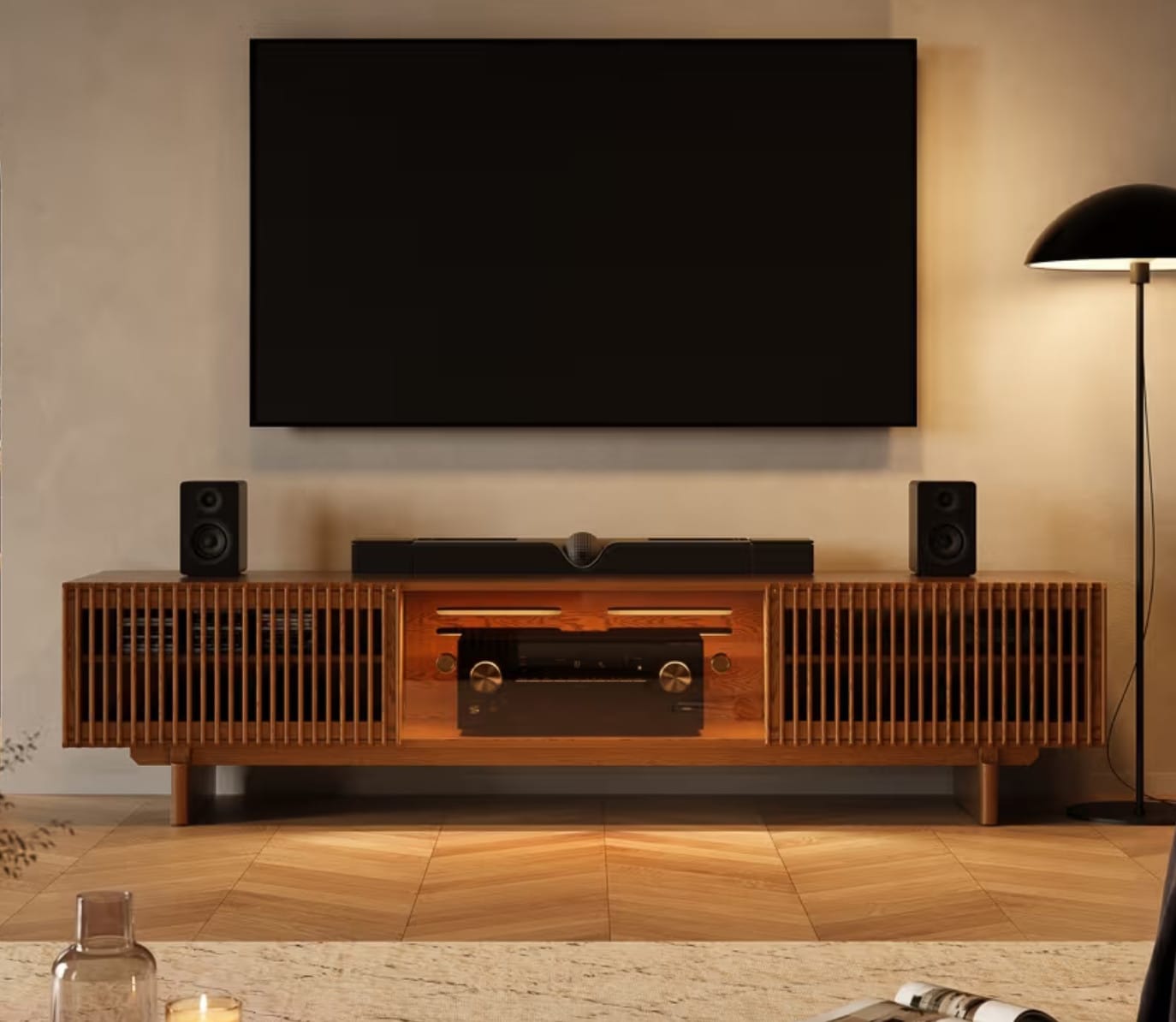
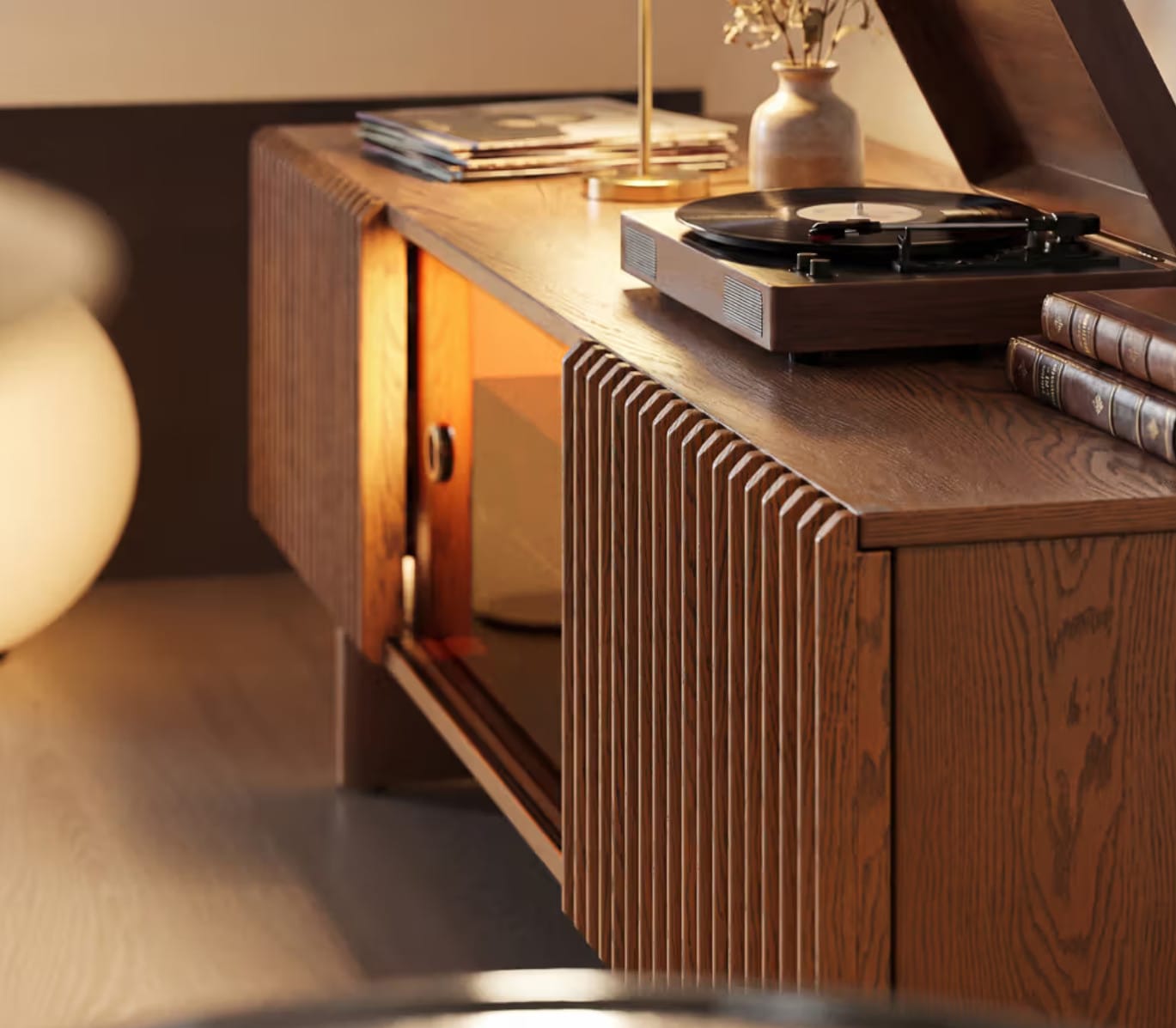
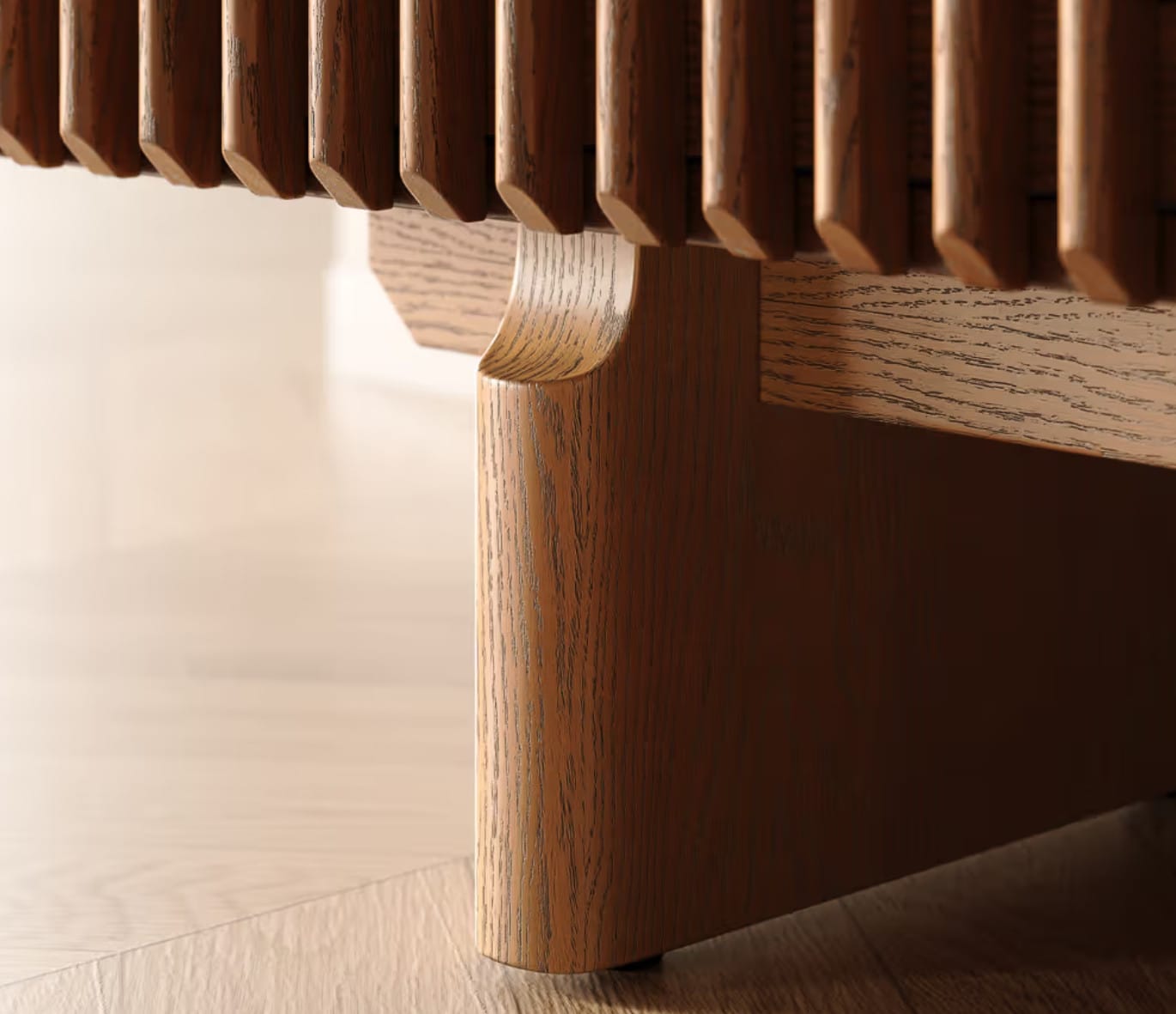
Somewhere between a plank on a wall and a 71-inch illuminated walnut cabinet, a decision had been taken that I have no memory of taking.
I looked at it for a long time. And then I made the mistake of looking at what would be sitting in front of it.
Suddenly the sofa was wrong. Not broken. Not uncomfortable. Wrong, in the specific sense of being the sofa that would now be sitting in front of a walnut mid-century TV stand with six-level LED lighting.
And I recognised the feeling immediately, because I'd read about it, which turns out to be no protection whatsoever.
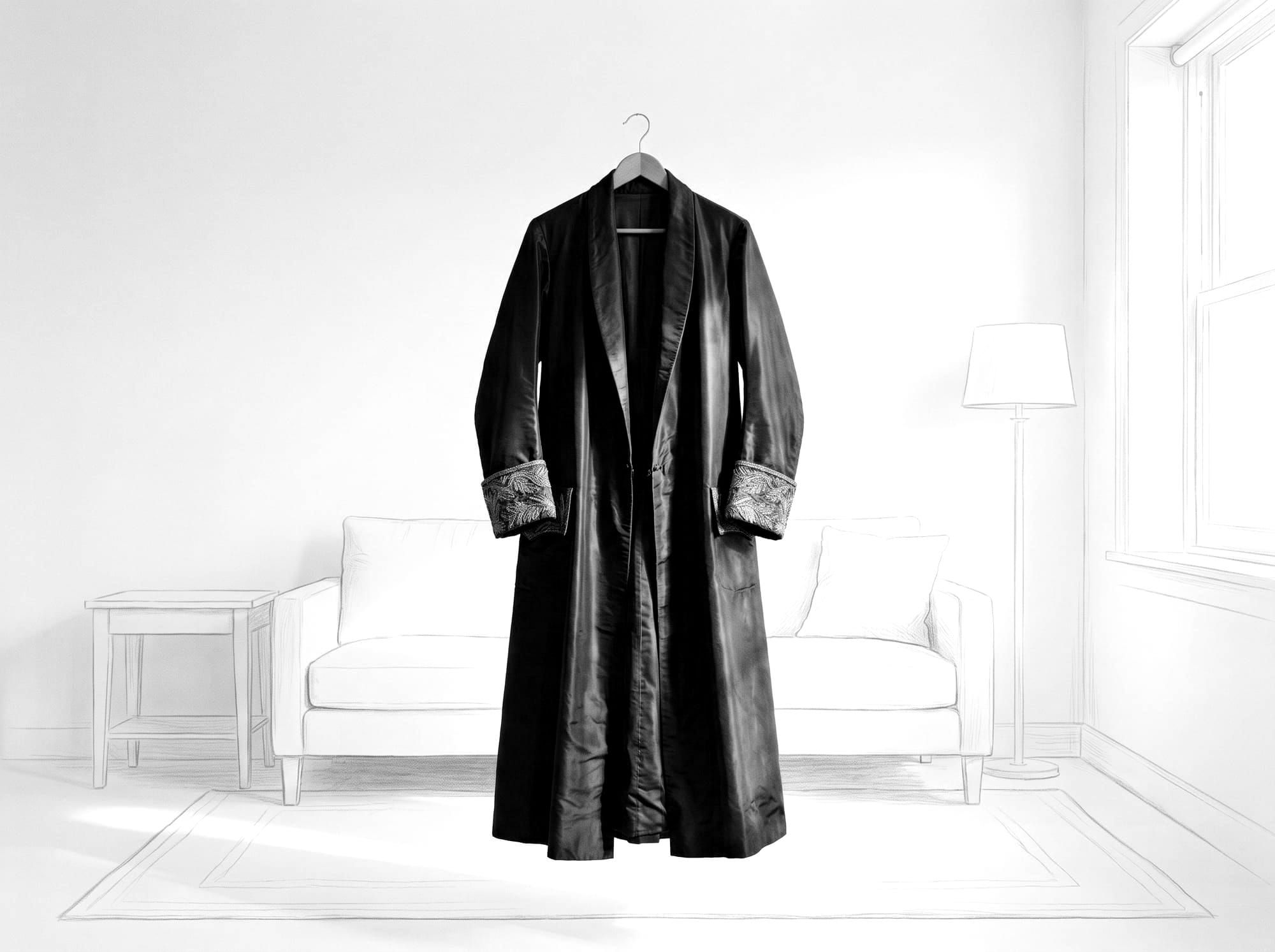
Diderot's dressing gown, 1769
Denis Diderot spent most of his life comfortably broke, and then late on he came into some money and somebody gave him a magnificent scarlet dressing gown.
He put it on. And then he looked around his study.
The straw chair he'd worked in for years now looked like a straw chair. So it went, and a leather armchair came in. The old wooden desk had to go. The prints on the wall were embarrassing next to the new desk, so better art arrived. Piece by piece, every single thing he owned was replaced in order to be worthy of a dressing gown, and he ended up in debt and miserable in a study he no longer recognised.
He wrote an essay about it, Regrets on Parting with My Old Dressing Gown, and the line everyone remembers is that he had been absolute master of the old one and had become the slave of the new. Beverly Landais, in a lovely piece on the paradox of pleasure, renders it as: "I bought a coat, and it cost me my freedom."
The anthropologist Grant McCracken gave it a name in 1988. The Diderot Effect. And two hundred and fifty-seven years after the dressing gown, it came for me through a slatted-door television cabinet with a 250-pound weight capacity.
Why this isn't the treadmill
I've written about the hedonic treadmill before, in Escape the Treadmill and in my notes on Morgan Housel's The Art of Spending Money. I assumed at first that this was the same animal wearing a different coat. It isn't, and the difference is the whole reason I'm writing this.
The hedonic treadmill is about time. You buy the thing, you're delighted, and then you adapt, and six months later it's just the sofa. The joy decays. That's a problem of the future.
The Diderot Effect is about geometry. It has nothing to do with how long the pleasure lasts. It's that the new object silently re-rates everything standing next to it. The sofa didn't get worse. The TV stand made it worse, instantly, from across the room, before either of them had been delivered.
The treadmill says this won't make you happy for long. Diderot says this will make eleven other things look wrong by Thursday.
And notice when all this happened to me. I hadn't bought anything. The floating shelf never made it as far as a basket, the Arboren isn't ordered, the sofa I'd suddenly gone off doesn't exist yet either. The entire cascade ran on photographs, in a browser, in a house that isn't finished, and it still managed to talk me from a plank of wood up to a piece of furniture with its own remote control.
You can be entirely immune to the treadmill and completely defenceless against this, and I think that's most of us. We've all learned to ask "will I still want this in a year?" Almost nobody asks "what will this make me want next week?"
Which is the more expensive question by a wide margin, because the dressing gown was a gift. It cost Diderot nothing. Everything after it cost him everything.
The counterweight
Somewhere in the middle of all this I watched a video with a title I found hard to argue with.
The argument, roughly, is that the appearance of wealth and the fact of wealth are almost opposites, and that most of what looks expensive is a monthly payment wearing a nice jacket. Nothing there that Housel wouldn't sign off on. But sitting next to Diderot it does something sharper, because it explains why the cascade is so hard to stop: each purchase isn't really being bought against your bank balance, it's being bought against the object next to it.
A wonderful movie about the Rat Race
Steve Cutts is an English illustrator, and this is four minutes and sixteen seconds of animation containing not one line of dialogue. His own summary is better than anything I'd write: the story of a rodent's unrelenting quest for happiness and fulfilment. A rat goes looking for the thing in the title. Every time he closes on it, it has a price, and it needs something else bought alongside it.
Fifty-nine million people have watched this. I hadn't, until this week, which tells you something about the quality of my browsing.
Cutts diagnoses, though. He doesn't prescribe, and the rat never does get out. For the prescription you want Beverly Landais, who offers seven ways: experiences over objects, savour instead of rushing, gratitude lists, a pause before buying, less social media, more people, more service. All good. All true.
So here's the one that actually works, and it's less noble than any of hers.
Never look at the new thing in the room it's going into. Diderot's ruin began the moment he wore the gown at his own desk. The gown was fine. The comparison was fatal. Once you place the new object mentally into the existing room, every other object in that room begins negotiating for replacement, and you'll lose, because you're outnumbered.
Buy the thing on its own merits, or don't buy it. But don't let it stand next to your furniture and start pointing.
We're building a house right now, which means I get to make this mistake in a handful of rooms simultaneously. So I've started doing the opposite thing on purpose — deliberately buying down, in ways that felt like defeat at the time and now feel like the smartest money we've spent.
We were going to have Murphy beds about $5-6K. We're now considering cheaper sleeper sofas. about $1-2K. There was going to be a bespoke fitted L-shaped desk, about $2K, and now there's probably going to be an L-shaped standing desk, $650.
Every one of those swaps was me refusing to buy the finished version of a life I haven't started living yet.