
The "Laziness Tax": Why Small Comforts Come with Massive Price Tags
Paying for convenience via delivery and apps that reduce friction in buying can massively cost you in the long run.

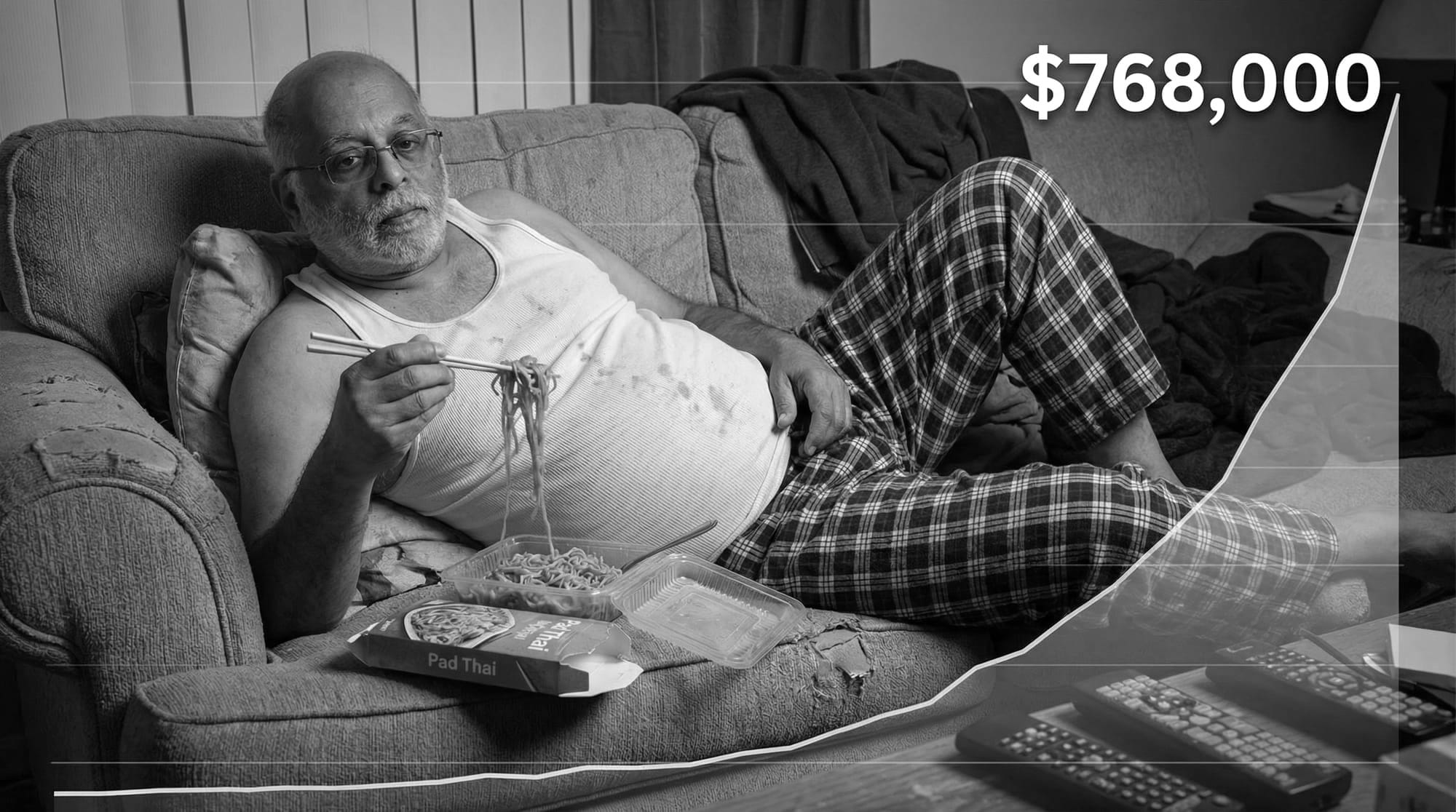
The $42 Pad Thai: A Story of a Sneaky Villain
We’ve all been there. It’s 7:00 PM, you’re exhausted, and the thought of boiling a pot of water feels like climbing Everest. You open an app, tap a few buttons, and thirty minutes later, dinner is at your door.
In that moment, it feels like a win. But there is a hidden "villain" in this story. This villain is the:
"Laziness Tax"—a system designed to harvest your hard-earned money by exploiting a glitch in your psychology called "present bias".
Let’s look at a quick Before-After-Bridge to see the stark contrast in our daily choices:
- The "Before": You pay $42 for a Pad Thai order that costs $14 at the restaurant. Between menu markups, delivery fees, service fees, and tips, you are paying a 200% premium just to avoid a ten-minute drive.
- The "After": You have an extra $28 in your pocket, the food is hotter because it didn't sit in a car for twenty minutes, and you’ve broken the cycle of dependency.
- The "Bridge": Recognizing that immediate convenience is often a mirage that hides a much larger financial cost.
The "Harvesting" Machine: Where Your Money Goes
To solve a problem, we first have to name it. The convenience industry isn't just offering a service; it’s reframing your message through a vivid comparison—like a "tax" on your future self.
Here is a breakdown of how this "dragon" of convenience consumes your wealth:
- Food Delivery: Orders are typically 40-60% higher than pick-up prices. Over a year, this habit alone can cost the average person $1,352.
- The Grocery Gap: Services like Instacart add 25-30% to your bill through markups and fees, often totaling over $2,000 annually.
- The "Small" Stuff: Pre-cut fruits and veggies carry 200-400% markups. Coffee pods? They cost 400% more than brewing a standard pot.
- The Subscription Trap: Services like Amazon Prime remove the "psychological friction" of buying, leading members to spend significantly more than non-members.
We often tell ourselves the "Time is Money" story to justify these costs. We imagine we’re using that saved hour to do something productive or soul-fulfilling.
But let's be honest: most of that "saved" time just goes back into scrolling or more "leisure" that doesn't actually recharge us.
The Epic Quest for $768,000
If we look at this through the lens of a Journey of Discovery, the "treasure" at the end is staggering.
If you spend an average of $400 a month on these convenience premiums—which is easier to do than you think when you factor in delivery, pre-made foods, and subscriptions—and you invested the money instead, what would happen?
Over 35 years, that "laziness tax" compounds into over $768,000 in lost wealth!
That isn't just "pizza money." That’s a house. That’s a decade of early retirement. That is the cost of identity transformation. You aren't just a "consumer"; you are a "wealth-builder" in training.
How to Slay the Dragon: Your Action Plan
You don't need a "hack"—you need a framework to change how you decide. Here is how you can move from being "harvested" to being in control:
- Calculate Your Premium: Track your convenience spending for three months. See the "villain" for what it really is.
- Create Helpful Friction: Delete the delivery apps. Remove your saved credit card info from your browser. Force yourself to wait 24 hours before hitting "Buy" on a non-essential.
- Reclaim Basic Skills: Learn to chop your own onions. Learn the 15-minute "emergency meal" that prevents a $50 DoorDash order.
- Reframe Inconvenience: Instead of seeing a chore as a burden, see it as an investment. That 10-minute drive to pick up your food is a $25-an-hour "job" you're doing for your future self.
Why This Matters for You
When you stop competing on noise and start connecting on meaning, you realize that your time and money are your most precious resources. By choosing a little bit of "productive struggle" today, you are buying your freedom tomorrow.
You’re reminding yourself that there is a capable, resilient human being behind that screen—not just a metric for an algorithm to exploit.
This post was based on the following video.