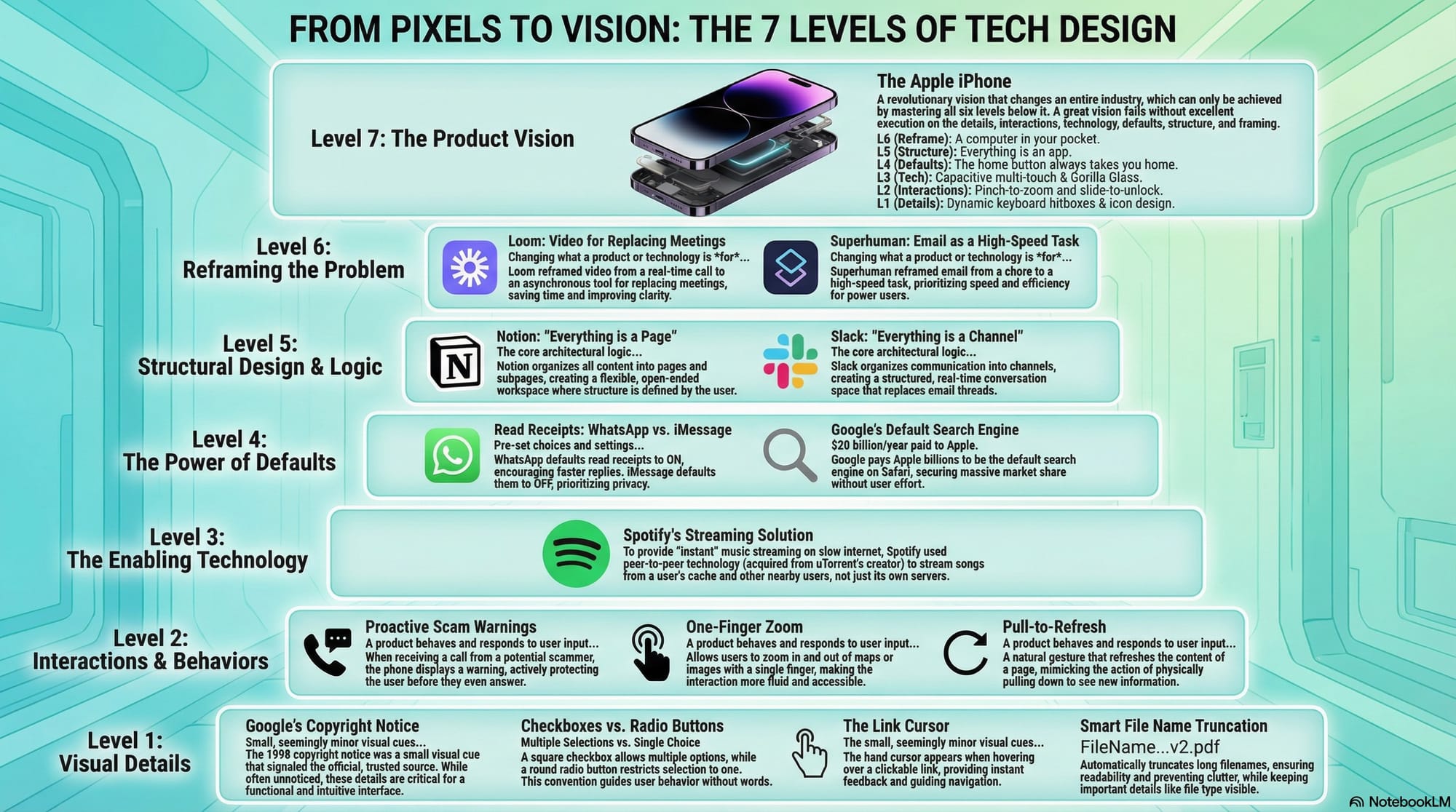
The Magic of UX Design
UX design is managing the intersection of business, people, and technology.


Why Your Screen Actually "Gets" You
Have you ever picked up your phone to do one quick thing, only to realize forty minutes later that you’re deep in a digital rabbit hole? Or maybe you’ve tried to use a new app and felt so frustrated you wanted to throw your device across the room. Believe it or not, the average person has around 80 apps on their phone but only uses 5 to 8 of them every day. The ones you keep using are the ones that "get" you.
That seamless feeling isn't an accident. It’s a field called User Experience (UX) Design. It is the invisible superpower that dictates how you feel when you interact with technology. If you've ever wondered why your favorite apps feel like magic while others feel like homework, you’re about to discover the secret blueprint behind your digital life.
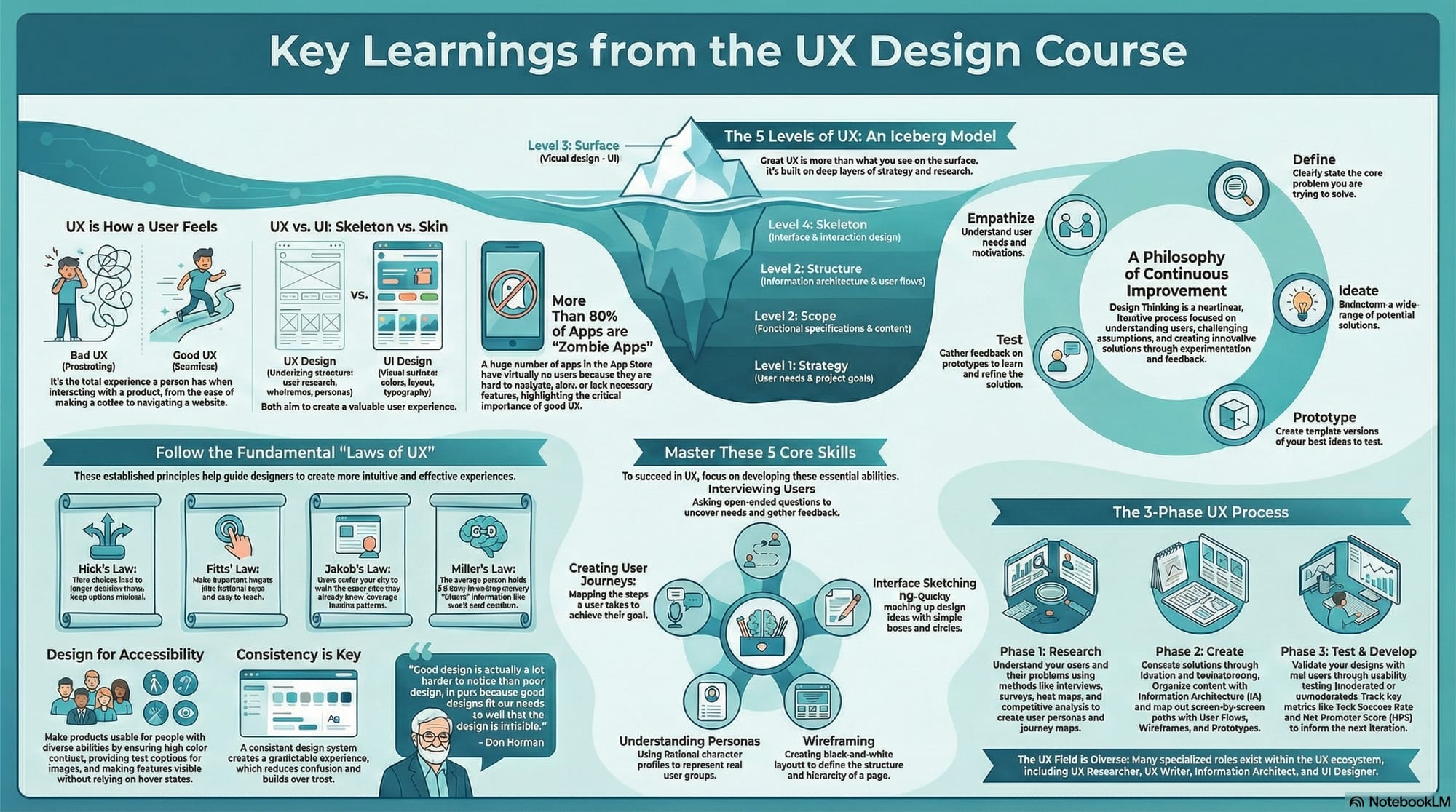
In 2024, I completed a course on UX design from 42 courses. Follow the hyperlink for the course details. The below image has some key learnings from the course.
The Hero’s Journey (And You’re the Star)
Every time you open an app, you are starting what storytellers call a Hero’s Journey. You have a goal—the "treasure"—whether that’s ordering dinner, finding a song, or checking your bank balance. A great app acts as your mentor and ally, guiding you through the path to that goal as quickly and easily as possible.
When an app fails you, it becomes the "villain" in your story. We’ve all faced the "Enemy Narrative": inefficiency, waste, and confusion that make simple tasks feel like an epic struggle. But here is the first big secret: it’s almost never your fault. If you can’t find a button, it’s because a designer failed to put it where you naturally look.
What is UX Design, Really?
People often confuse UX with UI (User Interface), but there’s a big difference. Think of an elevator: the button panel and the floor indicator are the UI. The UX is how long you waited, how you found the elevator, and even the temperature and lighting inside. Or, as one expert put it: "UI is the saddle, the stirrups, and the reins. UX is the feeling you get being able to ride the horse".
As a UX designer, the ultimate goal is to manage three intersecting elements: business, people, and technology. They are essentially part-psychologist, part-detective.
The "Iceberg" Under Your Thumb
When you look at your screen, you’re only seeing the Surface—the shapes, colors, and fonts. But like an iceberg, there is a massive volume of work happening beneath the water that you never see:
- Strategy: Figuring out what you actually need.
- Scope: Deciding what features are actually useful.
- Structure: Organizing information so it makes sense.
- Skeleton: Placing buttons exactly where your thumb expects them to be.
The Laws That Govern Your Brain
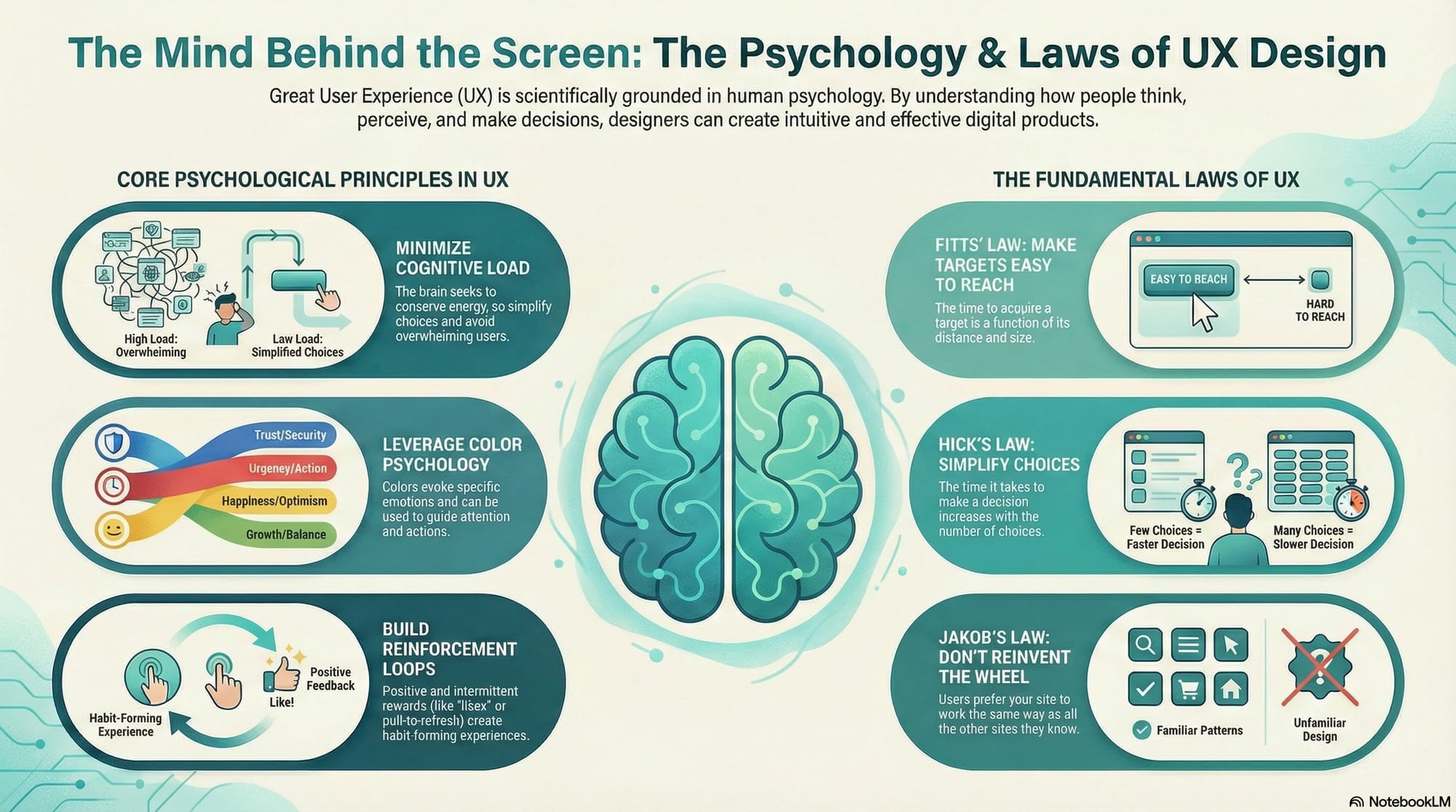
Designers use specific "laws" of psychology to make apps feel intuitive. You benefit from these every day without knowing it:
- Jakob’s Law: You spend most of your time on other apps. This is why most shopping apps look the same—you already know how to use them, so you don't have to learn a new "language" just to buy a pair of shoes.
- Hick’s Law: The more choices you have, the longer it takes to decide. This is why Netflix groups shows into categories like "Trending Now"—it’s trying to save you from "choice paralysis".
- Miller’s Law: The average person can only keep 5 to 9 items in their short-term memory. This is why your credit card numbers are broken into small "chunks" instead of one long, terrifying string of digits.
The "Before and After" of Tech
Think about how booking a cab used to work. It was a "Before" story full of friction: finding a phone number, waiting in the cold, and making sure you had cash. Uber built a "Bridge" to a better "After" : the app automatically detects your location, shows you exactly where the car is, and handles payment automatically . By removing that uncertainty and friction, they transformed a stressful experience into a seamless one.
What’s In It For You?
Why should you care about any of this? Because understanding UX gives you three major advantages:
- Spot the Manipulation: Some apps use "Dark Patterns" or "sludge" to make things intentionally difficult, like trying to delete an account . Once you know the rules, you can spot when an app is working for you versus when it's trying to trick you.
- Demand Better Tools: You stop blaming yourself for "not being tech-savvy" and realize that bad design is a failure of empathy from the company.
- Harness the Dopamine: Apps are designed to trigger dopamine—the "happiness chemical"—to keep you coming back. Red notification badges are used specifically because they grab your attention and tell your brain to be alert. Knowing this helps you take back control of your screen time.
The Bottom Line
Great UX design is often unremarkable because it is so seamless. It’s the "flour" at the start of the recipe, not just the seasoning you sprinkle on for taste at the end. The next time you use an app that feels like it’s reading your mind, take a moment to appreciate the "invisible" work that made your life just a little bit easier.
Want More?