
The Poker Player Teaches Driver's Ed

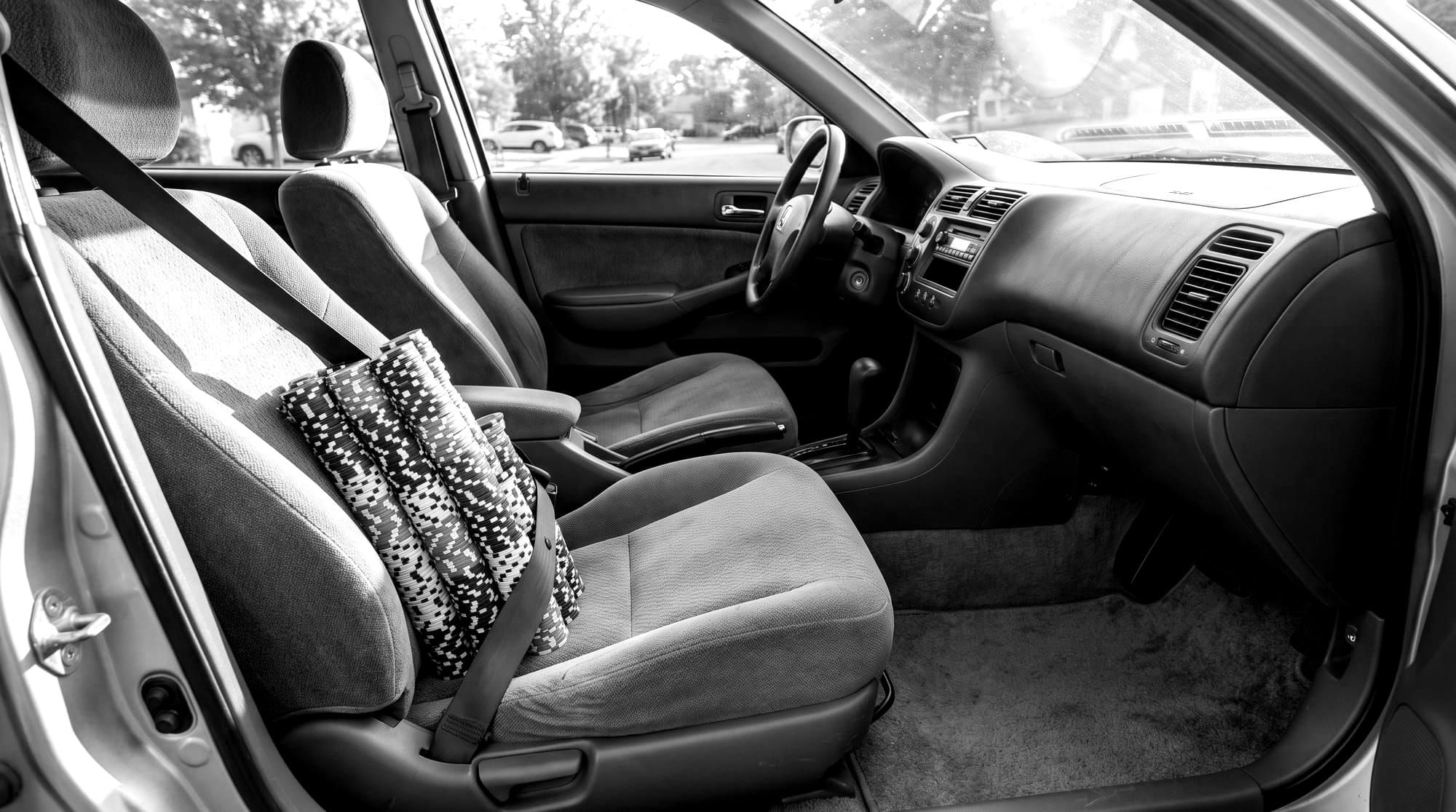
The "Drunk Driver" Fallacy — retold for anyone with a learner's permit.
The Class
It began, as these things often do, with Dev.
Dev had passed his road test on Tuesday and had been describing it ever since as "flawless." By Friday the story included a yellow light he'd beaten by, in his words, "a comfortable half-second."
Fourth period, Room B12: Driver's Ed. The teacher was new this year — Ms. Vega. Before this, she had played poker for a living.
Someone asked why she stopped.
"I didn't stop," she said. "I changed tables."
Lesson One
She opened with a story instead of a syllabus.
"It's two in the morning. A man leaves a party heavily drunk and drives home. He speeds through three red lights. His vision is blurred. His reaction time is a rumor. And he pulls into his driveway without a scratch on the car."
She let it sit.
"Grade him."
"F," said most of the room.
"He made it home," said Dev. "Technically that's an A."
"That," said Ms. Vega, "is the most expensive sentence in the English language."
She wrote one word on the whiteboard: RESULTING.
"Resulting is judging a decision by how it turned out. The drunk driver didn't make a good decision. He survived a bad one — a gamble with ruin that happened to look like an ordinary Tuesday night. The outcome is lying to you."
"But he's fine," said Dev.
"So far," she said. "Here's the thing. Life is not chess, where every piece is on the board and the best move wins. Life is poker. Hidden cards. Shifting odds. Luck with its thumb on the scale. You can play a hand perfectly and lose your shirt. You can play like a fool and win."
"Then how do you know if you're any good?"
"You stop grading the driveway……and start grading the driver."
Nine Green Lights
Ten minutes later, Dev was retelling his flawless test, now with director's commentary.
"How many green lights?" Vega asked.
Dev counted. "Nine. Well — eight, and the yellow."
"Did you earn them?"
The pause ran longer than Dev liked.
"In most success stories," she said, "the tide matters more than who's rowing the boat. When something goes right, pull it apart. Which part was your skill? Which part was just the tide coming in?"
"The best hand I ever played, I lost," she added. "The worst hand I ever played paid for my first car. Guess which one I bragged about."
She gave them homework she called the Dial. Take your last win. Now imagine a total stranger did exactly what you did — same choices, same everything. Set a dial from 0 to 100: how much luck, how much skill?
"It's remarkable," she said, "how honest you get about a stranger."
Lesson Two
Amara had not chosen a first car. Amara had forty-seven open tabs and eleven spreadsheets, and had ranked airbag configurations "as a warm-up."
"So when do you decide?" Vega asked.
"When I have all the information."
"Then you've decided never."
She told them about a famous experiment at Columbia University: a store display with 24 jams drew the bigger crowd — but the table with only 6 jams sold more. Past a point, more information doesn't buy better choices. It buys analysis paralysis — procrastination in a lab coat.
Then two columns on the whiteboard:
| KNOWN FACTS | HIDDEN CARDS |
|---|---|
| what the car costs | what breaks next year |
| the crash ratings | the driver behind you |
| your actual savings | "it'll probably be fine" |
"In chess, everything is on the board. On the road, half the deck is face-down. Sort what you know from what you're hoping — then decide with the columns you have, not the columns you want."
Jonah
Jonah got honked at once in the parking lot and was still furious three miles later, which is how he missed his turn, which made him angrier, which is how he missed the next one.
Poker players have a word for this too, Vega said: tilt. The last hand infecting the next one. Anger from a loss, swagger from a win — same disease.
"It's obvious to everyone else in the car," she said. "It's invisible to you."
She read them a line from the songwriter John Prine:
"The past follows you everywhere you go. We hang it like a relic on our rearview mirror and we keep glancing at it while we're trying to drive forward. But the rearview mirror can't steer the car."
"Regret gets exactly one job," she said. "Improving your next decision. If it isn't doing that job……it's cargo."
The Bet
"Everyone speeds a little," Dev announced on Thursday. "It's basically fine. Everyone knows this."
"Want to bet?" said Vega.
"What?"
"A thousand dollars. Your money. On everyone knows."
Dev suddenly wanted to double-check a few things.
"Funny how that works," she said. "The moment real money touches a belief, you stop being its fan and start being a scientist."
Two moves went up on the board:
- Stop saying I'm right. Start saying I'm 70% sure. It leaves the door open for the 30% you might be missing.
- Before defending any belief, ask the poker question: want to bet?
Because beliefs are sunglasses, she said — and you forget you're wearing them. Decades ago, Dartmouth and Princeton students watched film of the same football game and saw two entirely different games, each side certain the other had played dirty. Same field. Same plays. Different sunglasses.
The Final Lesson
On the last day, she held up a seatbelt.
"Three thousand years ago, a sailor named Ulysses knew the Sirens' song would hijack his mind. So he tied himself to the mast before he could hear it. He didn't trust Future Ulysses for one second. He was right not to."
Click.
"That's all this is. A deal your calm self makes to protect your panicked self. You buckle before you need it — because when you need it, it's too late to want it."
Then the napkin math, four lines, for any big decision:
- Map the scenarios — from great success to total disaster.
- Put a value on each — money, time, reputation.
- Give each one honest odds — with today's information, not today's mood.
- Multiply. That number — the expected value — gets the vote. Feelings get a seat at the table. They don't get the vote.
And one last trick, which she claimed was worth the whole semester: "Before any big plan, write the crash report first. Pretend it's twelve months from now and the plan failed completely. Write down why. Every reason you list is an exit ramp you still have time to build."
The Road Test
Amara finally picked a car — with three tabs open, not forty-seven — and took her road test in the rain.
A light went stale yellow. She braked. Smooth, boring, correct. The examiner marked her down for "hesitation," and she passed with a score two points lower than Dev's.
Dev was gracious about it for the better part of a minute.
"Wrong scoreboard," said Vega. "The rain doesn't know who got the higher score. Grade the braking, not the paperwork."
KHS MORNING BULLETIN
Driver's Education Course Concludes
Students are reminded that the semester's only collision occurred in the west lot at approximately 0.5 mph, that both drivers involved have described the outcome as "honestly a win," and that Ms. Vega has entered it in her gradebook as two losses.
In other news, the chess club has challenged the poker club to settle "which game is life." The poker club replied that one match couldn't possibly tell you. The chess club said that's exactly what a loser would say. Faculty advisors report that both clubs are correct……
Ms. Vega's Logbook
Anyone can learn to press a pedal. The difficult part……is learning what deserves the credit.
Outcomes lie. Beliefs wear sunglasses. The rearview mirror can't steer. So the job never changes, at any table, at any age: make the best bet you can with the cards showing — and grade the process, not the driveway.
One question for whoever finds this logbook.
If you had to put $1,000 on your biggest goal right now……how much of that confidence is the skill of your process, and how much is hoping for a green light at 2 a.m.?
The ideas in this story come from Thinking in Bets by Annie Duke, who played poker professionally for nearly two decades. The characters are fiction; the studies — the jam experiment, the Dartmouth–Princeton game — are real.
Story format inspired by Mihir Misra's The Tiger Teaches Photography