
The Radiologist Teaches Birdwatching

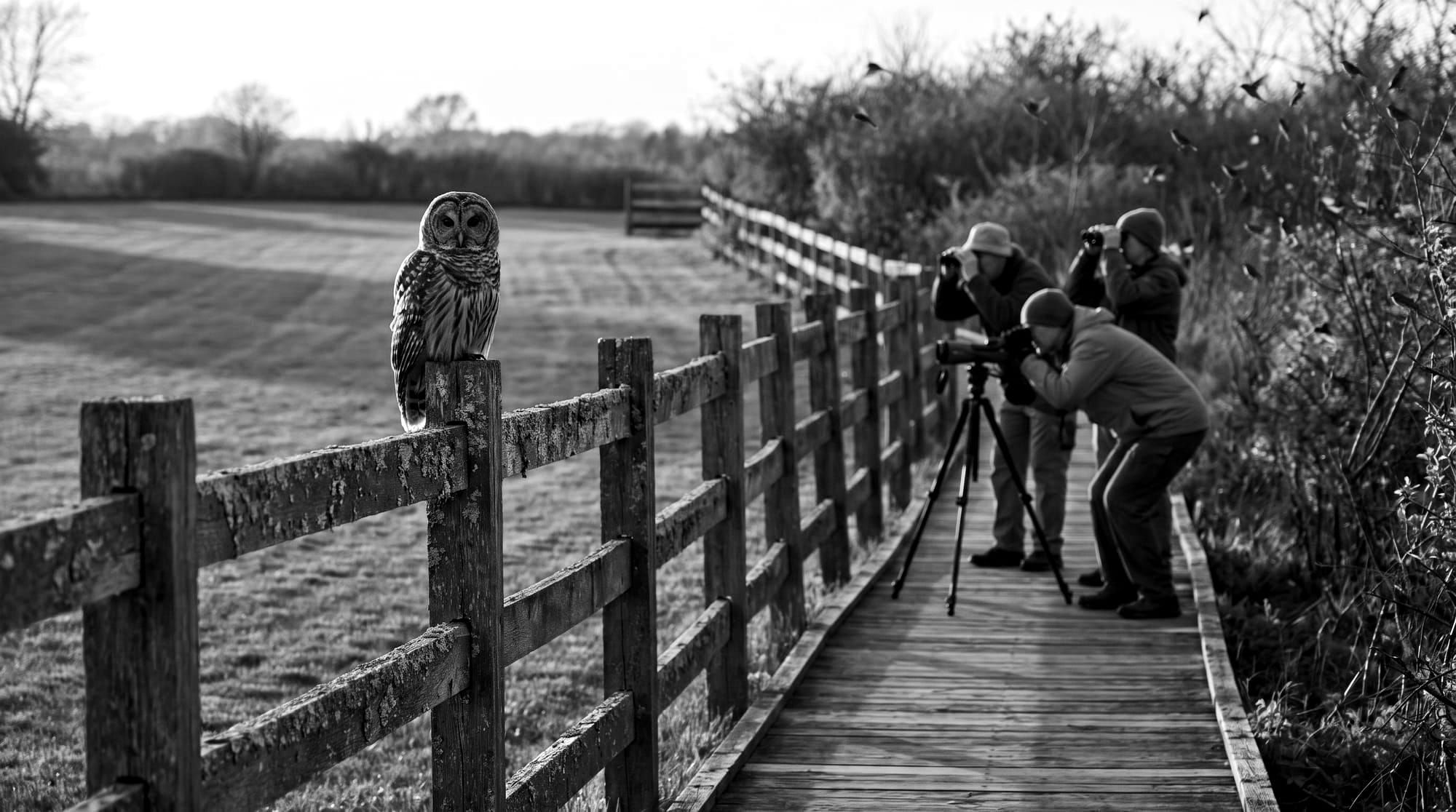
A fable about looking right at it.
The Walk
It began, as these things often do, with Theo.
Theo arrived at the preserve gate at 5:40 a.m. carrying a spotting scope, two cameras, and a laminated card bearing the one bird he had come to see — a cerulean warbler, reported on the county rare-bird alert at 4:15 the previous afternoon. He had 214 species on his life list and had watched none of them for longer than four seconds.
Dr. Ibarra was already at the first bend of the boardwalk, looking at nothing in particular, which is how she sees everything.
"What are we looking for today?" Theo asked.
"Nothing," said Dr. Ibarra. "It's the only way to find it."
The others arrived on the hour. Gus, who had driven 41,000 miles last year to famous refuges in four states and had never once logged a bird from his own kitchen window. And Nadia, forty-one, who had now postponed the same spring warbler trip nine springs in a row, and who checked her work phone twice between the gate and the bend.
Someone asked Dr. Ibarra how she'd learned to spot a wren at sixty yards.
"Thirty years reading chest films in a dark room," she said.
"Then how did you end up out here?"
"I retired," she said. "I came outside."
Lesson One
She stopped the group at the fence line.
"Tell me what you see."
"Trees," said Gus.
"The feeder," said Nadia.
"A trail marker," said Theo, already scanning past it for something cerulean.
Dr. Ibarra said nothing. She let the silence do the teaching. Forty seconds passed, which on a boardwalk is a very long time.
Then Nadia made a small sound. On the third fence post, gray as the wood and exactly as still, sat a barred owl……which had been there the entire time.
"In 2013," said Dr. Ibarra, "researchers at the Visual Attention Lab — Harvard Medical School and Brigham and Women's Hospital — asked 24 trained radiologists to review chest scans for lung nodules. Onto one of the scans they had pasted a g******. 20 of the radiologists sailed past it.
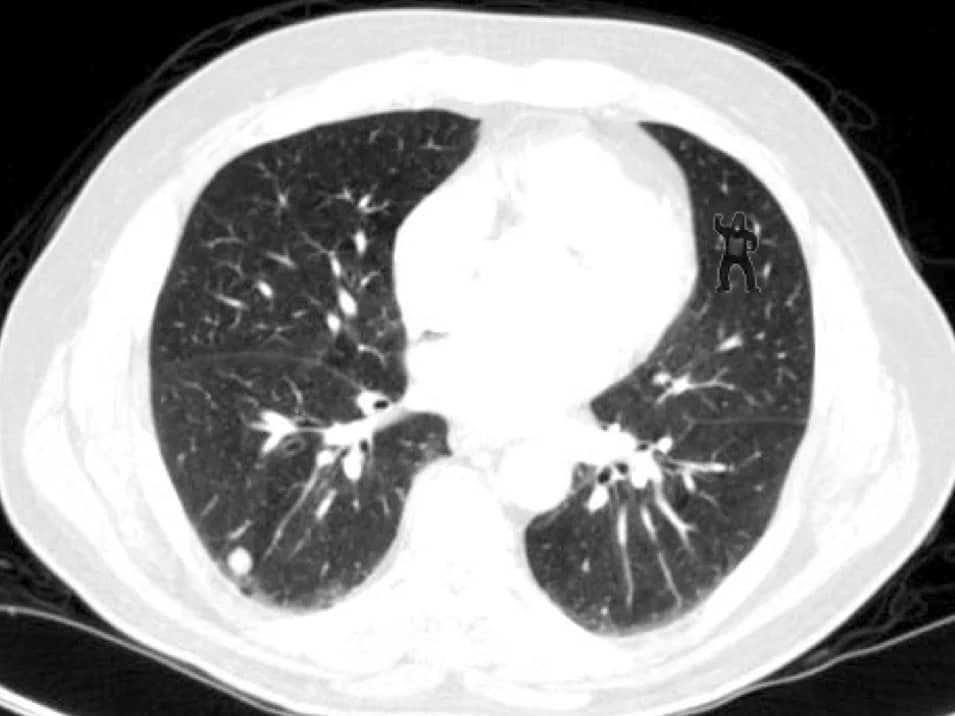
And the eye-tracking data showed the worst part: the majority of the ones who missed it had looked directly at it."
"They saw it, but not really," said Nadia.
"There's a name for it," said Dr. Ibarra. "Inattentional blindness — coined in 1992, by the psychologists Arien Mack and Irvin Rock. The lapse where you miss the unexpected thing in plain view, because your focus is trained on a specific task. Those radiologists weren't careless. They were trained. Their eyes found what they were sent for, and nothing else. I know," she added, "because for thirty years, mine did too."
She tapped the laminated card in Theo's pocket.
"Your list is a scan. You will find exactly what it tells you to find……and you will look directly at everything it doesn't."
The Great Lawn
Mid-morning, the trail crossed the county park — eleven acres of famous, manicured meadow, mown to velvet, photographed for brochures.
"Count the singers," said Dr. Ibarra. In a breeding season, a singing male means a territory; a territory is a household paying its way.
They counted two.
Then she led them a quarter mile on, to the scruffy hedgerow behind the maintenance shed — a tangled quarter acre nobody had ever photographed on purpose. They counted eleven singers before Gus ran out of fingers.
"But the lawn is beautiful," said Gus.
"It photographs well," Dr. Ibarra agreed. "Now do the arithmetic by the acre instead of by the view."
The hedgerow, acre for acre, was outproducing the great lawn by a factor nobody wanted to say out loud.
"City accountants have run this exact count on neighborhoods," she said. "When you measure tax revenue per acre, the dense, modest, old streets routinely outproduce the grand, spread-out ones — which means the modest streets end up quietly subsidizing the pipes and pavement of the places that photograph well. And the maintenance bill for that arrangement has started arriving. Their fix reads like habitat management: let the hedgerow kinds of streets exist again, and price the land by what the acre does, not by how it looks in the brochure."
Gus was quiet for most of a mile. He was thinking, visibly, about a ditch behind a supermarket near his house.
Nadia's Spring
They rested at the overlook bench. Nadia's phone came out; her thumb moved; the trip she had been not-taking for nine years flickered somewhere behind her eyes.
"Next spring," she said, to nobody in particular. "When the project ships."
"You said that," said Theo, not unkindly, "last spring."
Dr. Ibarra watched the ridge for a while before she spoke.
"There are people whose whole job is interviewing retirees — hundreds of them — about what they'd do differently. The answers rhyme. There's a stretch of life — typically the late 50s into the 60s — where health, time, and money finally overlap — they call it the golden window — and most people look straight past it, because their eyes are trained on the account balance. And once the window opens, the arithmetic says you get about 500 weeks of the high-energy kind. The go-go years. Their number, not mine."
"Five hundred weeks of what?" said Nadia.
"Of this," said Dr. Ibarra, not gesturing at anything in particular, which meant all of it.
She nodded at the ridge. "The warblers get a two-week window over that gap every May. They don't reschedule it. They go while the going is in season. Everyone plans against the risk of going too soon……nobody prices the risk of waiting too well."
"You make it sound like the window closes."
"It's a window," said Dr. Ibarra. "It has a frame. That's what makes it a window and not a horizon — and I didn't leave the dark room to escape it. I came to this. That part matters."
Count Day
Four Saturdays later, the preserve held its spring count.
Theo took one bend of the boardwalk and did not leave it. His laminated card stayed face-down in his pocket. Standing still, he logged 61 species. The cerulean warbler, reported again that morning, never showed.
"The bird owes you nothing," said Dr. Ibarra, initialing his tally. "The looking was correct."
Gus never reached the preserve at all. He had stopped at the ditch behind the supermarket and counted 34 species in under an acre, which he reported to anyone who stood still long enough, by the acre, with comparisons.
Nadia was not there. A postcard was pinned to the trailhead board, postmarked from a ridge eleven hundred miles south, where the warblers cross in May.
It said: The window is open. — N.
THE PRESERVE BULLETIN
Spring Count Concludes
Volunteers logged 118 species. Theo has laminated a new target card; it is blank. Gus has petitioned the county to recognize the supermarket ditch as significant habitat; the county has asked him to please stop citing figures per acre. Nadia's postcard remains pinned to the notice board; staff describe the handwriting as relaxed. Dr. Ibarra has been asked what next month's class will be looking for. She says she has no idea……which, she adds, is the entire course.
Dr. Ibarra's Field Notebook
Anyone can learn to look. The difficult part……is staying findable by the things you were not sent for.
Thirty years, I found every nodule I was asked to find. Meanwhile: the owl was on the post the whole time. The hedgerow was out-singing the lawn the whole time. The window was open before anyone thought to call it golden.
By the retirees' arithmetic I have some hundreds of good weeks left, and so — reader — in all likelihood do you. The number is simply harder to see from where you are standing. It looks like a horizon. It is a window.
So: what has been sitting on your fence post all along?
The ideas in this story are real.
The gorilla-in-the-scan study was run in 2013 by the Visual Attention Lab (Harvard Medical School and Brigham and Women's Hospital), and reached me via Sahil Bloom's newsletter.
The golden-window and 500-weeks findings come from Streamline Financial's conversations with hundreds of retirees.
The tax-revenue-per-acre analysis comes from the urban-planning video below.
The characters are fiction; the studies are not.
Story format inspired by Mihir Misra's "The Tiger Teaches Photography."