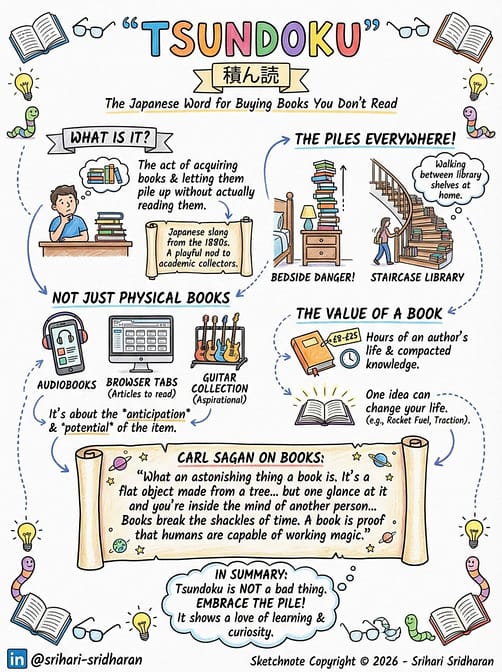
TSUNDOKU
Surround yourself with books. Knowledge will result due to infusion.

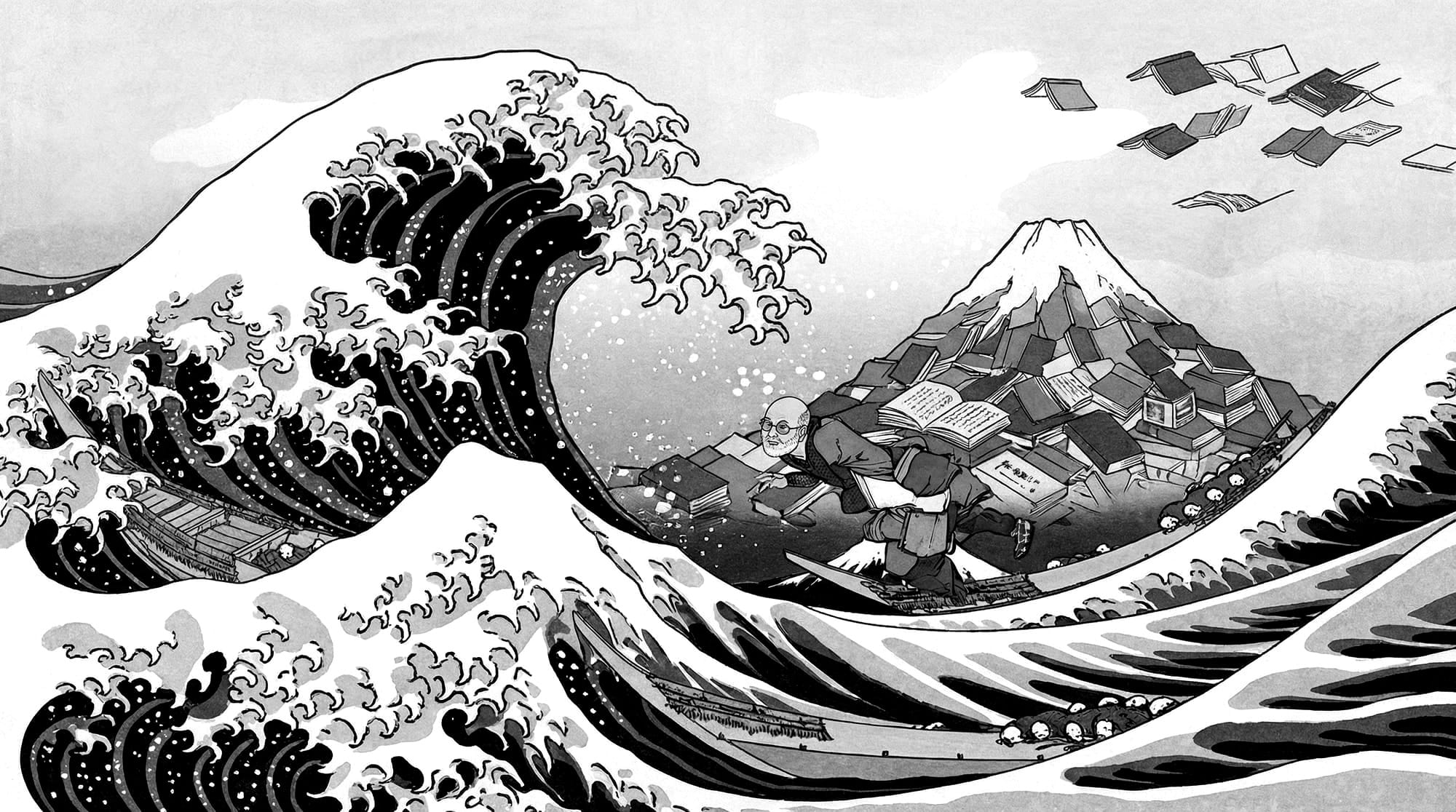
Why Your Book Stack is Your Greatest Ally
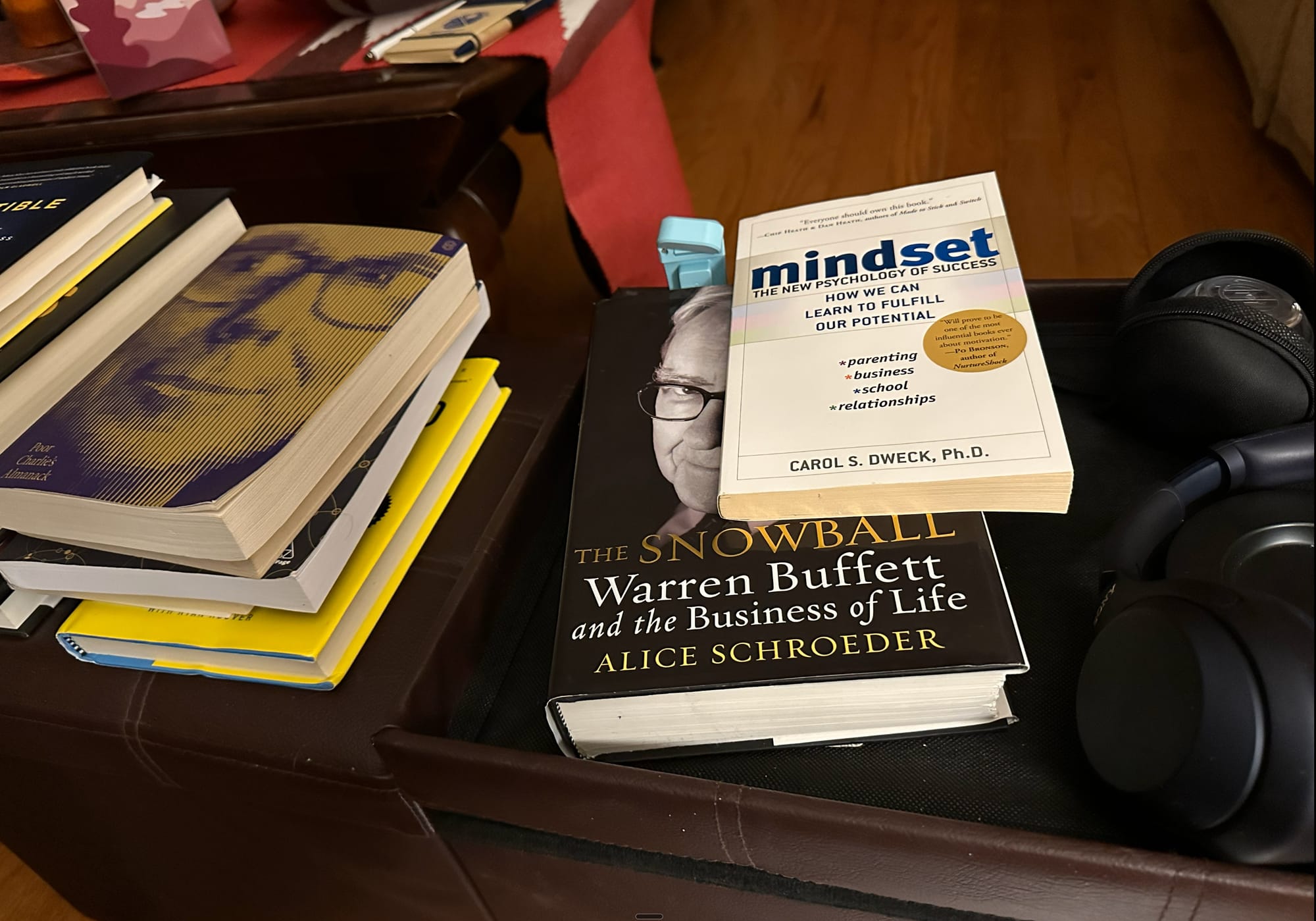
Have you ever looked at the stack of books by your bed—the one that seems to grow faster than you can actually read— and felt a twinge of guilt? In Japan, they have a word for this: tsundoku. It’s that specific habit of acquiring reading material and letting it pile up.
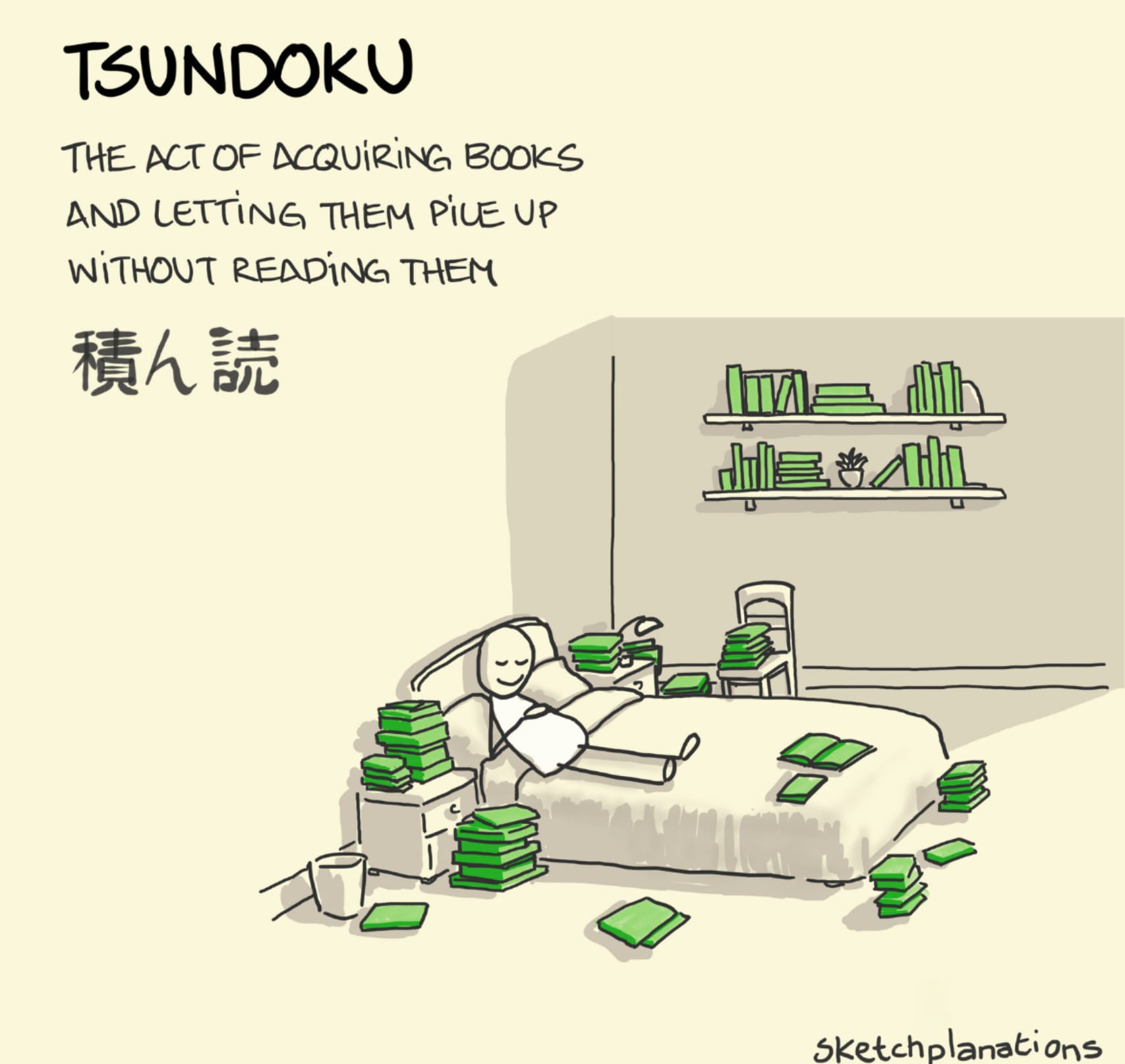
But far from being a sign of failure, those piles represent something much deeper: an aspirational desire to learn and a physical connection to the history of human thought.
When we talk about the books we keep, we are really talking about storytelling constructs—the frameworks that tap into how humans are wired to learn and decide.
The Narrative of Your Bookshelf
Every book on your shelf fits into a blueprint of how we process the world. When you choose to keep a book rather than just searching for a summary online, you are engaging with specific "constructs":
- The Metaphor / Analogy (Reframing the Pile): Instead of seeing a "to-be-read" pile as a chore, think of your bookcase as a wine cellar. You collect books to be enjoyed at the right time, in the right place, and in the right mood. This reframe simplifies the abstract guilt of "clutter" by tying it to something familiar and valuable.
- The Journey of Discovery: A book is a treasure hunt. Unlike a quick search on the internet—which often promotes surface-level research and weak attribution—a book allows you to follow a chain of thought back to its original source. This construct takes you on an exploration, where you "stumble on insights and return with treasure".
- The Hero’s Journey (Customer-as-Hero): When you buy a book, you are positioning that author as a mentor or ally. You are the hero of your own intellectual journey, and the books on your shelf are the tools you’ve gathered to help you transform.
I recollect a massive home library of one the most influential people I met in India. He was the father of a college classmate, and in the 1980's held position as the Home Secretary, and later was the Comptroller and Auditor General of India.
Their house was filled with books. Wikipedia mentions:
A life-long lover of books, and a voracious reader, he amassed an immense collection of 1,20,000 books in Hindi and English. These cover all aspects of world history, and specifically Indian history and religion, spirituality, the Nationalist Movement, Indian Renaissance, public administration, economics, management.
The Public Library
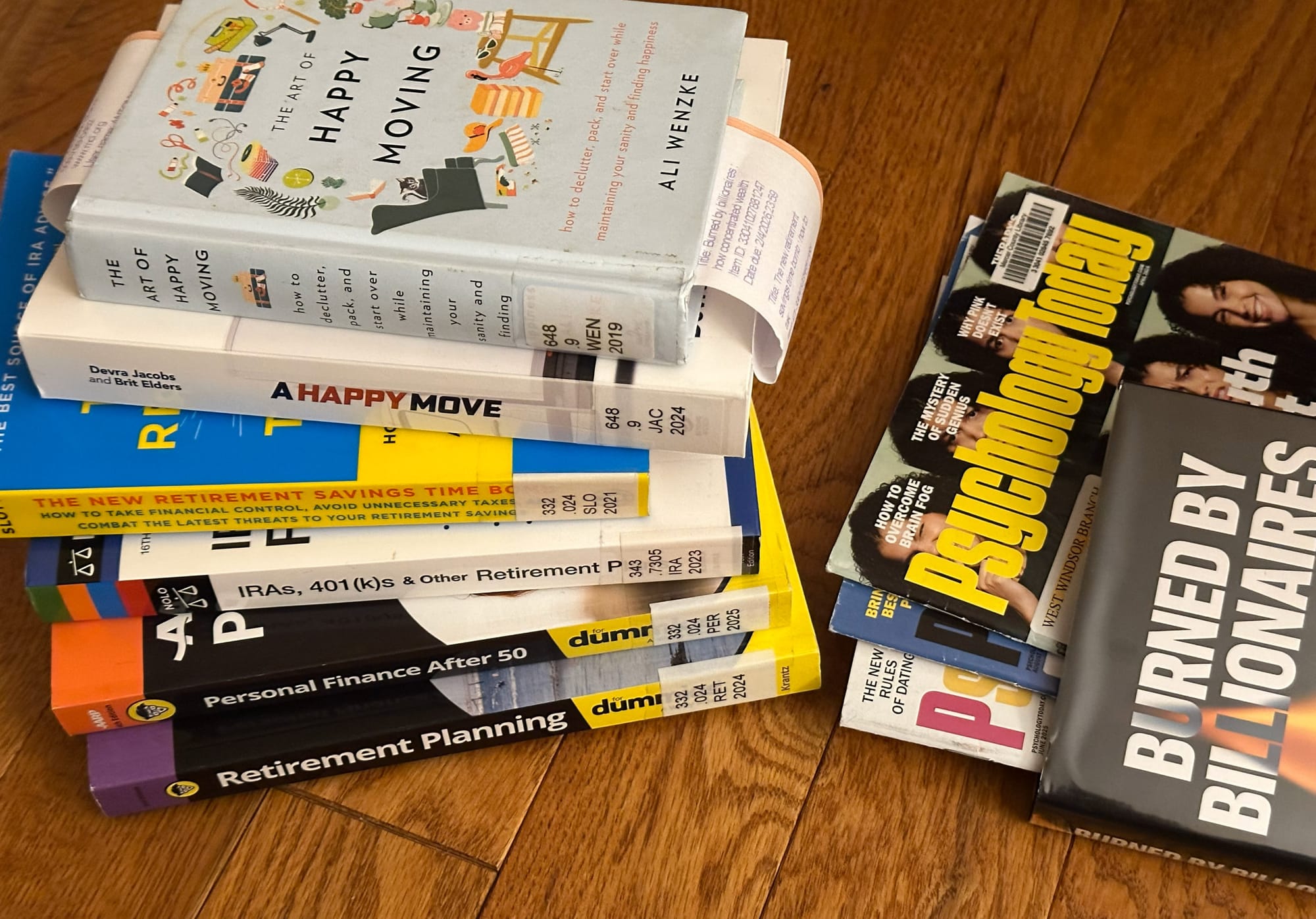
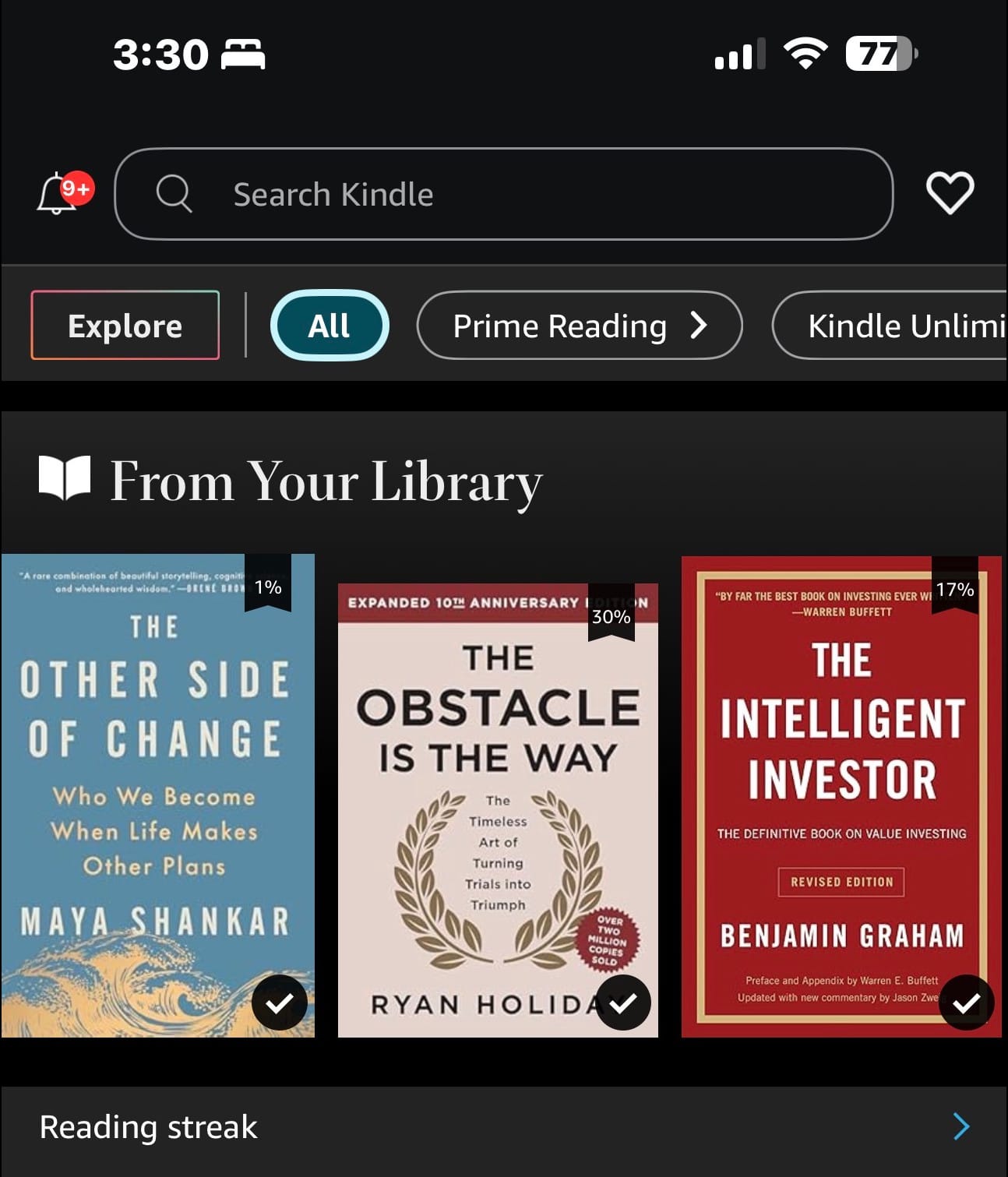
The public library is not a resource I have leveraged much over the past two decades. However, this year I resolved to consider using that also rather than just keeping buying and accumulating books. Below are some books that I picked up from the library. I even borrowed an e-book from the library.
If viewing on website, click thumbnails for larger view
What’s In It For You?
Why bother with physical books in an era where AI can summarize anything in seconds? Resonance. When you read the original source, you don’t just gather data; you connect on a level of meaning.
Ramit Sethi’s book-buying rule: “If you’re even considering buying a book, JUST BUY IT.” If you get even one decent idea from it, it’s a bargain.
Following the blueprint of timeless storytelling helps you earn trust in your own ideas and reminds you that there is a human being behind the words.
As Carl Sagan famously noted, a book is "proof that humans are capable of working magic" because it allows an author to speak clearly and silently inside your head across the millennia.