
Your Thinking Has an Org Chart
Use NotebookLM to Ground. Use Claude or Gemini or ChatGPT to reason or ideate.

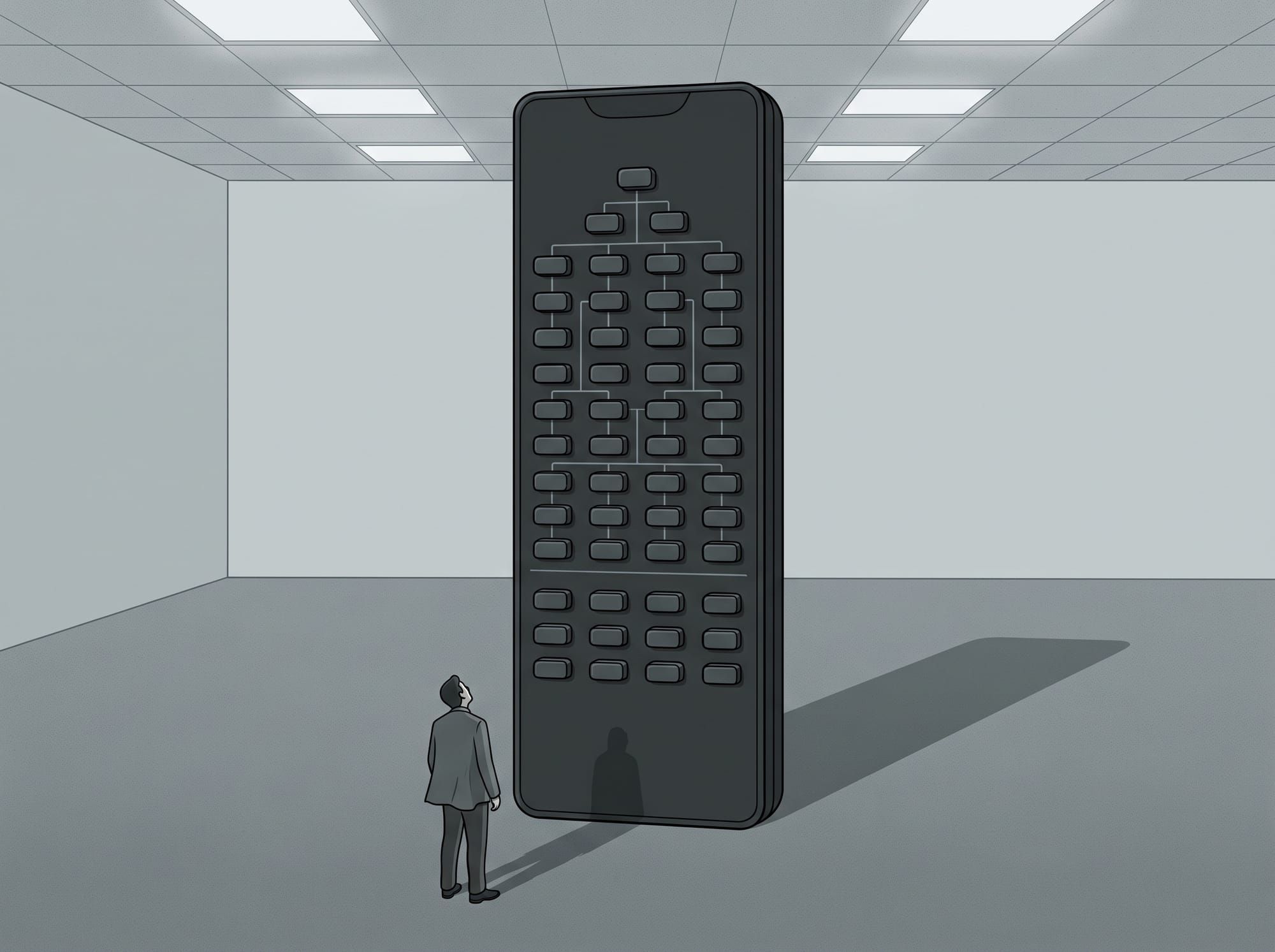
For about two years I have been driving a nail with a wrench.
That isn't my line, it's Joel Salinas's, from a field guide called The NotebookLM Leader's Playbook that I read this week. But it described my working habits so precisely that I had to put the thing down for a minute.
Here's the mistake, and I suspect a lot of you are making it too. You open one AI window in the morning and you make it do everything. Research, drafting, summarising a stack of PDFs, arguing with you about a decision, writing the email. It kind of works. So you never question it.
Salinas's argument is that serious AI work runs on two engines, built for opposite jobs, and that almost nobody runs both.
The grounded engine is NotebookLM. It answers only from the sources you personally hand it. You give it your documents and it reads those and nothing else. It cites the exact line it pulled from, and it can't invent a fact because it has nowhere to look. Its entire power is faithfulness.
The generative engine is Claude, or Gemini, or ChatGPT. It reasons, argues, drafts, builds. Its range is its power and also its risk, because an engine that can invent can invent the one fact you needed to be true.
One is caged to your material on purpose. The other roams free on purpose. And the rule that ties them together is four words:
Ground first. Then generate.
Pull your real sources into the grounded engine. Get a report you can trust. Hand that report up to the generative engine and let it think on top of ground you've already checked. The facts come from one side, the thinking from the other.
I read that and recognised my own bad habit immediately. My default has been to paste raw sources straight into Claude and ask it to reason, which means it blends real material with plausible-sounding filler and I can't always tell which is which 😦 Then I fact-check the output line by line, which is the exact tax I was trying to avoid in the first place.
What running it actually looks like
The playbook is refreshingly short on ceremony. Four moves.
- Set it up. notebooklm.google.com, sign in with a Google account, click Create new. Ninety seconds. Three panels, left to right: Sources, Chat, Studio. Put material in on the left, ask questions in the middle, produce something on the right. Once you see it that way you never feel lost in it.
- Feed it the mess. PDFs, a spreadsheet, seventeen YouTube videos, whatever the real pile is. As of July 2026 the free tier takes up to 50 sources per notebook, which is more than enough to run the whole thing without paying anybody.
- Interrogate it. Ask questions and get answers with citations you can click.
- Hand it off. Copy the grounded report, paste it into Claude, and tell it explicitly what it's holding. Salinas's own phrasing is roughly:
here's a research report I've already grounded in real sources, use only what's in it, don't add any fact it doesn't support, now draft the thing.
Two traps he names, both of which I've fallen into.
- The first is treating NotebookLM as a second Claude and asking it to brainstorm — wrong engine, it's built to be faithful, not clever.
- The second is one giant notebook for everything. One notebook, one job. A notebook stuffed with everything answers like it's guessing.
Copy and paste is the whole handoff, by the way. Don't wait until you've automated it. That's just a nicer-sounding way of not starting.
And then the cartoon
While all this was rattling around, I came across this, by Marketoonist, and it turned the whole thing from a tools post into something I'm still chewing on.
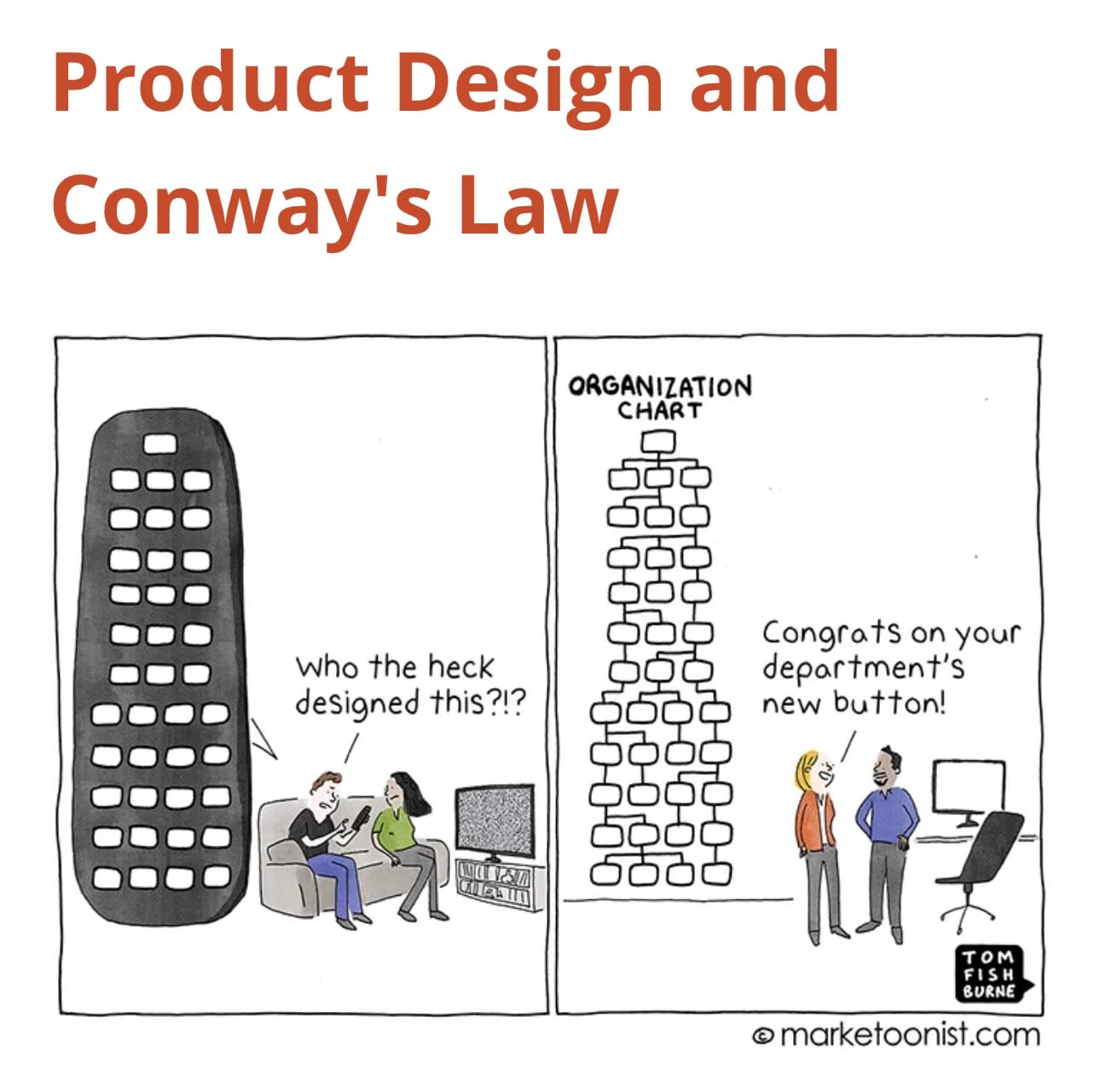
Melvin Conway published the observation in 1968, after Harvard Business Review turned the paper down. Any organisation that designs a system will produce a design whose structure is a copy of that organisation's communication structure. Fifteen departments, fifteen buttons. The remote isn't badly designed. It's accurately designed. It's a photograph of the company that made it.
I've think I've spent a career watching that be true of software, and I never once turned it around and pointed it at myself.
Because a one-person operation has a communication structure too. Mine was: one window, one conversation, everything through the same tab. And Conway's Law says that a thinking process shaped like a single chat window will produce output shaped like a single chat window. Fluent, fast, plausible, and quietly unable to tell you where anything came from.
That's the thing the playbook actually sold me on. Not a tool. A reorganisation.
Splitting research from reasoning isn't a productivity tweak, it's redrawing my own org chart so that facts and opinions stop reporting to the same manager. And the reason it works isn't that NotebookLM is smarter. It's that a separate department for is this true means somebody's actually doing that job.
And the fingerprints are the point. The couple on the sofa can see that the remote is mad. Nobody at the company could, because from in there it's just where the buttons go.
Ground first, then generate. Or don't, and enjoy your fifty-one-button remote.