
Making 3D Animated Shorts

The YouTube algorithm led me to a video about making Viral 3D animated shorts using Claude. Mr. Oni explains quite a lot and in the comments many people were praising him as the "GOAT" for sharing so many secrets for free.
I was hooked.
I was hooked because he explained how much hard work goes into creating a 1-minute short.
Somewhere in the comments of a similar video I saw that low effort is what makes things look like "AI slop"
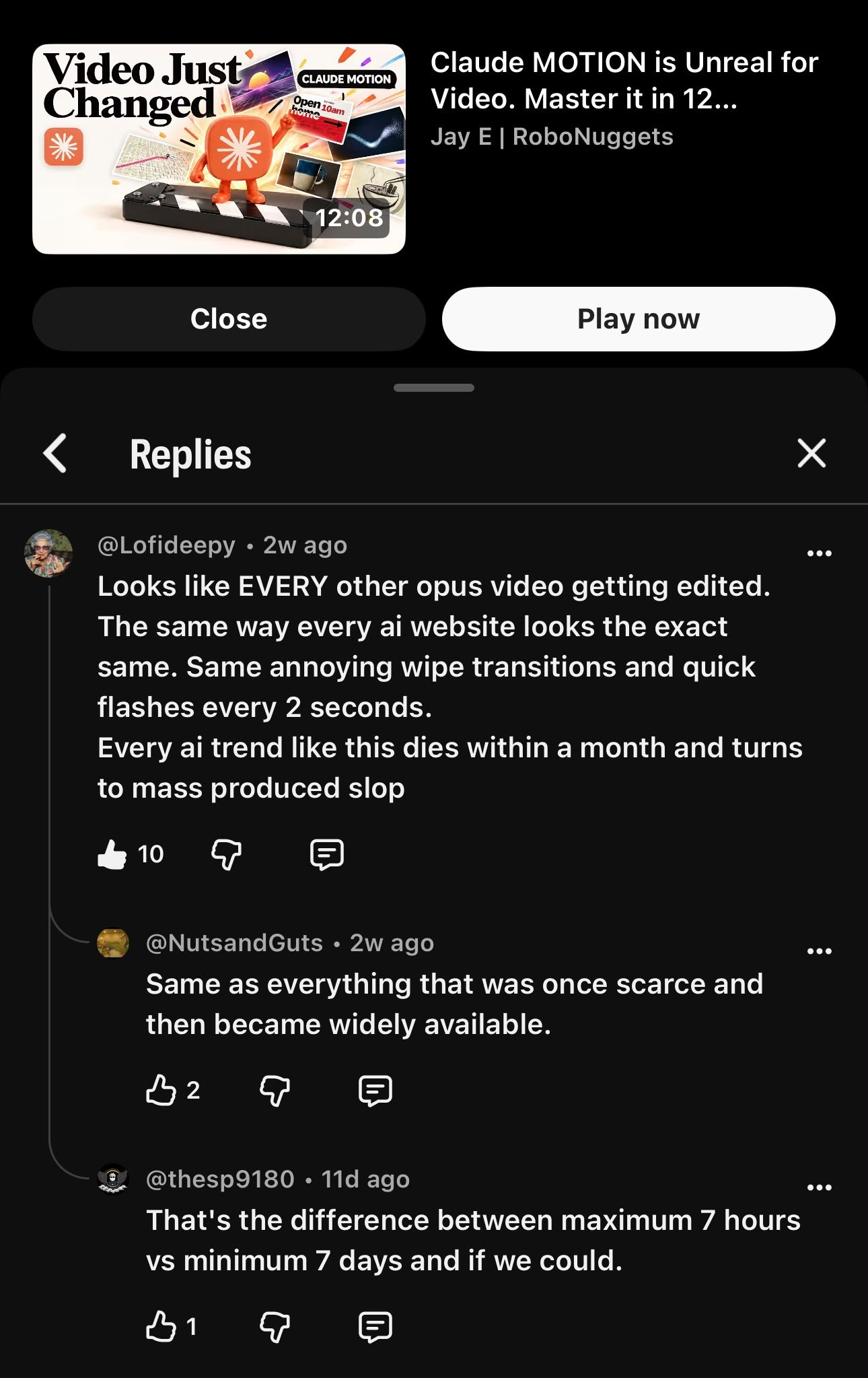
GOAT becomes MOAT :)
In Mr. Oni's next video, he explained that he only was sharing his secrets via Skool.
He explains (11:28 - 12:06) that he decided to charge for access to his community and the 3D shorts skill for two main reasons: to maintain a higher-quality community and to prevent the internet from being flooded with "AI slop."
Though the comments on this post were very unfavorable, with people accusing him of "going to the dark side", I actually agree with his logic.
If everyone can easily do this, it won't be impressive anymore
Explainer shorts for behavioral science
I had also just read the following blog post by 42courses, which featured an explainer video by Prisha - https://www.42courses.com/blog/how-to-get-your-hard-work-noticed
I thought I'd try to try a Claude Code-style video myself, a vertical explainer on the Diderot effect.
I signed up for Mr. Oni's Skool at $45/month.
The method I used came from Mr. Oni’s 3D animated shorts skill, which only works through his Skool connector. Claude ran Blender and the other tools through that skill while I approved each step.
The steps
- Setup (about 40 minutes). I installed the skill at 6:15 PM. It checked my PC and installed Blender 5.2, the free MPFB character add-on, and an updated ffmpeg. Then the connector pulled in the method documents and template scripts.
- Idea, script and storyboard (about 20 to 30 minutes). From about 6:55 PM I picked the core fact (one gift, a whole room replaced) and the myth to bust (“a nice gift is pure upside”). Then I approved a roughly 60-second script and a nine-shot text storyboard.
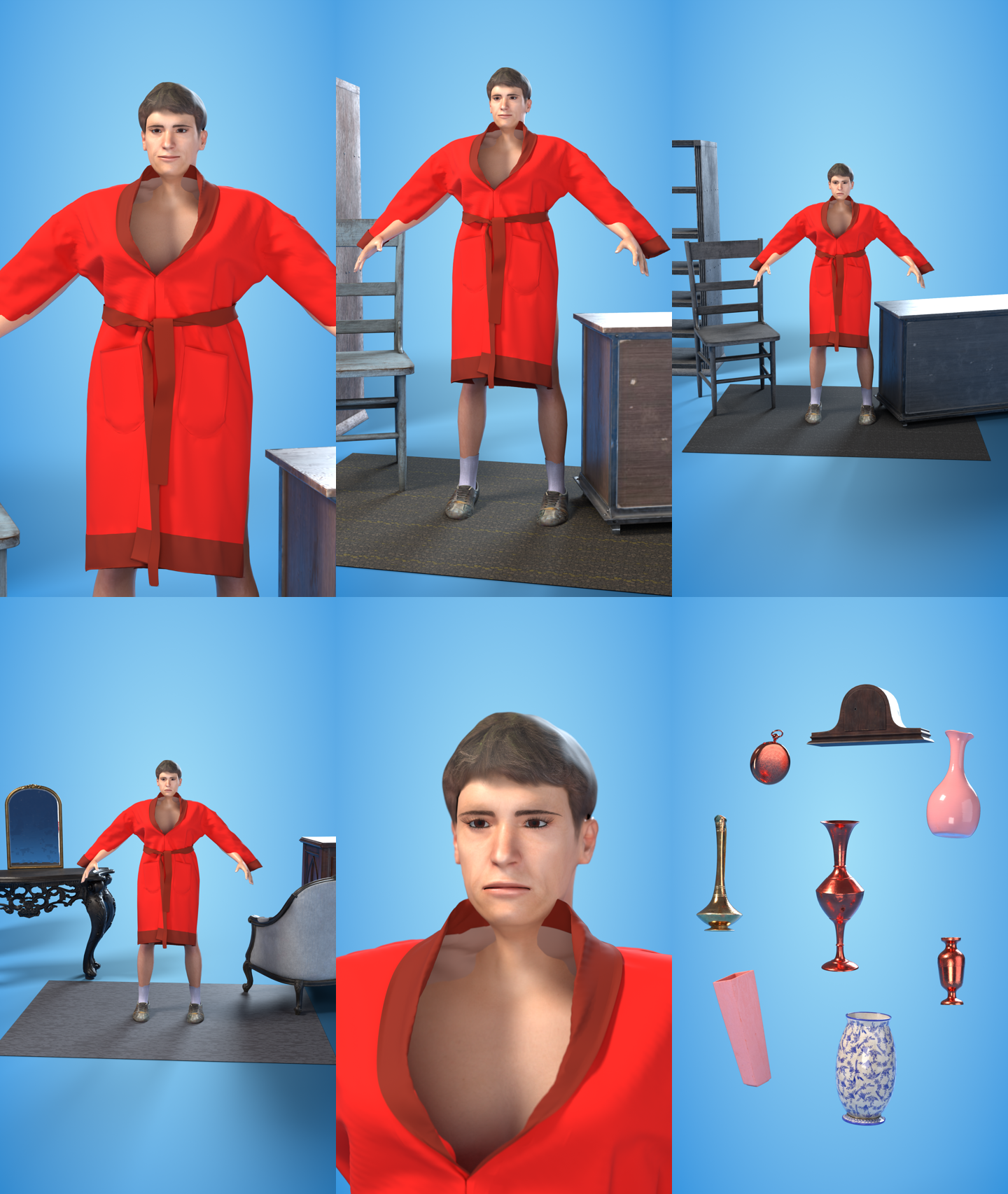
- Assets (from 7:10 PM). Furniture, rugs and lighting came from Poly Haven (free, CC0). The red bathrobe is a Sketchfab model by CYNTH NKORO (CC BY). The man is a MakeHuman character, aged up a little.
- Character fitting. The robe took the most fiddling. The sleeves, hem and width needed several rounds before it sat right on the body. I also rendered six 2K test stills before animating anything.
- Voice. I used the Slax voice on Fish Audio. The 57-second take was timed word by word, and those timings set where every shot begins.
- Animation. Camera moves, facial expressions, furniture swapping in one piece at a time, a golden glow, a 3D gold title and a matching ring of objects were all driven by code frame by frame.
- Sound and music. I added whooshes and hits on the cuts, a quiet room-tone bed, and a Suno-made music track that ducks under the voice.
- Captions. I wrote word-by-word highlighted captions, with the current word in yellow.
- Render and finish. Two Blender processes rendered 1,687 frames side by side from 9:31 PM to 12:12 AM, about 2 hours 40 minutes. A script then assembled four files: a full-quality and a phone version, each with and without captions.
How long it took
Counting from the skill download at 6:15 PM to the finished videos at 12:13 AM, the whole project took about six hours. The render was the biggest single block. The rest was setup, my approvals, and fitting the robe.
What I’d fix next time
The arms are stuck in a stiff A-pose, and there’s a small gap in the robe at some angles. Next time I’d add a proper arm pose and a quality-check pass before the long render.
Credits: method and skill by Mr. Oni (Skool); 3D robe by CYNTH NKORO (CC BY); models and textures from Poly Haven and MakeHuman (CC0); voice by Slax on Fish Audio; music made with Suno.
The Diderot Effect!
The short that I created
Lesson learned
In making this short, because of the sunk cost fallacy, I kept spending more and more time.
And effort.
And money, because I spent $200 to upgrade my Claude to the Ultra Plan.
I guess while creating this lesson I didn't pay attention to the fact that I fell prey for the Diderot effect myself!
Was it worth the time and effort? Maybe not.
Because this was my very first attempt, it's too early to tell.
I am very curious to hear your thoughts on my experiment yesterday evening. Did you like the explainer video and did you learn anything new?