
The Bargain Book That Talked Back

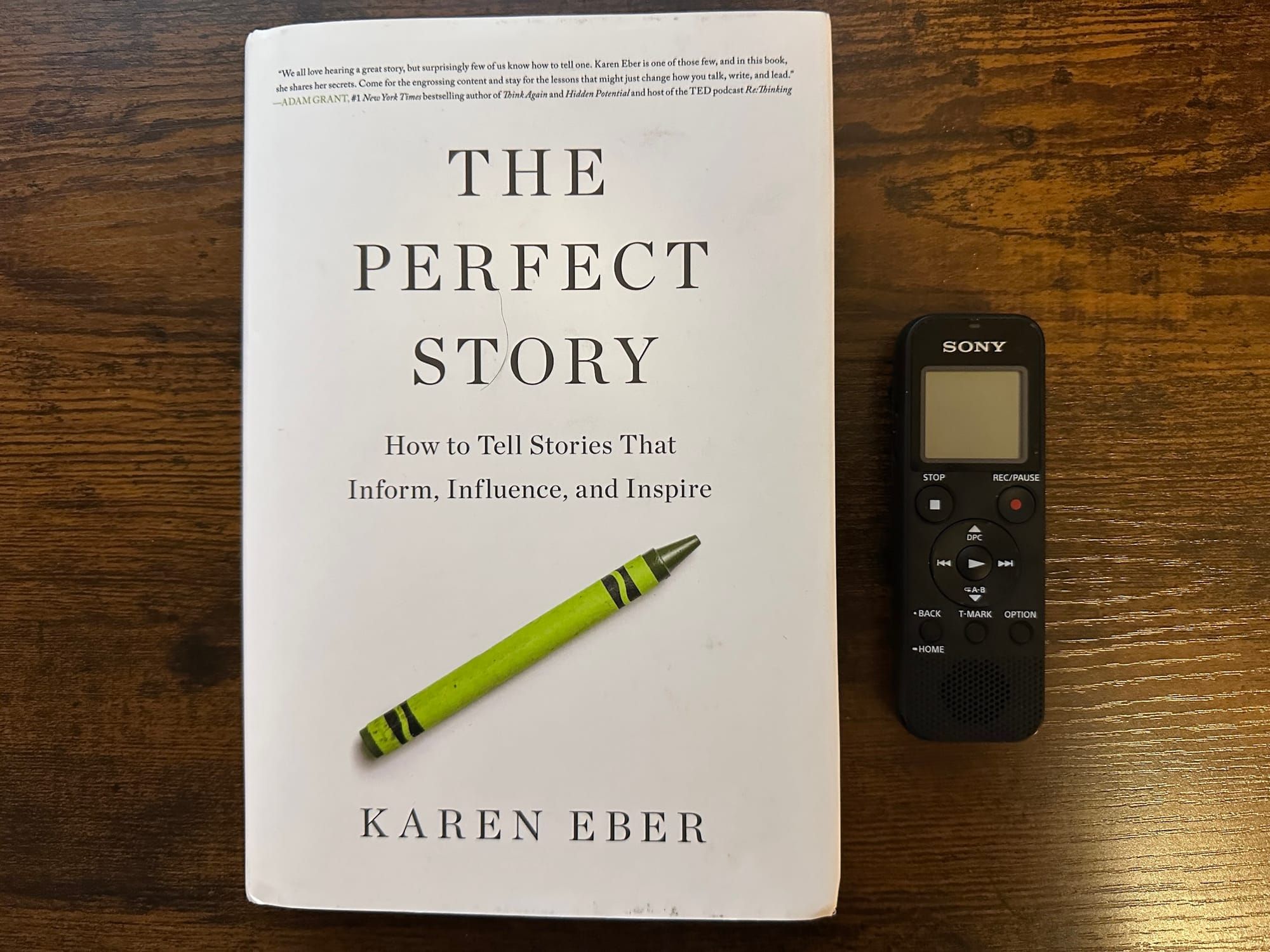
Earlier today I shared two of the stories from The Perfect Story: Ray and Maria, and Walt and Dotty. This post is a mini book review, some more of what I took from the book, which I haven't yet finished.
I paid only $5.75 for it at Abe's Books because I wanted to write better stories for my blog. I read it with a Sony recorder in my hand, since the ideas came faster than I could write them down or highlight. Later I simply plug the recorder into my computer and let the mp3 audio turn into text.
Don't Eat the Crayons
Karen Eber opens with a childhood story about crayons, and about her eyes, which seemed to change colors. It's a small, odd, memorable beginning, and it makes her first point: practice is the key to learning and growing as a storyteller. Nobody is born with this skill.
Your Brain Is Lazy (and That's Your Opening)
Eber explains that the brain loves to save energy. It predicts what comes next and likes repetition and familiarity. When you watch a movie, you're quietly guessing the ending the whole time.
Then the story does something you didn't expect, and you think I didn't see that coming. That jolt knocks the brain out of lazy mode, and that's when it pays attention.
She describes the brain as a library of files. Every day about 34 gigabytes of information come in through the senses, and the senses tie emotion to memory. So a good story should use sound, smell, texture, and taste, not just plot.
Picture a coffee shop. Plates clink, chairs scrape, the espresso machine hisses, conversations murmur past, and a croissant gives that first flaky crunch. Your brain takes it all in without being asked. Compare that to a Mozart sonata or "Imagine" by John Lennon, which light up the brain far more than plain noise. Stories can do the same.
A great story also beats a boring business discussion every time, because it shows you an idea instead of telling you a fact. I noticed that even Eber follows this rule. During the Olympics, she doesn't care about the world-famous athletes. She wants the stories of the random ones, to find out what they're like as people.
Incidentally I too am fascinated by athletes during the Olympics. I avidly follow not only the stories of superstars like Usain Bolt and Mo Farah but also lesser-known athletes who vlog like https://www.youtube.com/@RhysMcclenaghanGymnast/featured. Last month when I took the anti-MBA course at 42courses, I stumbled across a fascinating High Performance Podcast, which featured Dame Jessica Ennis Hill, the face of London 2012 (my all-time favorite Olympics)
Conflict, Connection, and the Story Only You Can Tell
Data doesn't change behavior. Emotion does. When we feel connected to a character, oxytocin is released and our attention stays high through the whole story. For that to work, the characters have to be relatable, and they need conflict. Conflict is what moves a story forward.
Eber also says to stop asking What does the market need?
Ask instead: What is the story only I can tell?
Where the Ideas Hide
Her advice for finding stories is not to cast a wide net but to dig deep, and constraints help. "Tell me about your childhood" gets you a city and a type of house. Ask "What sound or smell reminds you of home?" and the answers get specific. One person remembered a grandfather clock that had been in the family for three generations and ran seven minutes late. Another remembered a two-layer chocolate cake made for every family birthday.
Her prompts kept coming. What was your first car, first job, first concert? What would you grab if your house were on fire? What isn't funny when it happens but makes you laugh years later? What would you tell your younger self? Even "What's the last time you laughed out loud?" works. ( For me, it was the photoshop requests FB group where someone requested to add a dinosaur to a photo of a person seated on a park bench, that had been edited to put a bunch of senior citizens like myself in the background).
You don't need finished stories, just the ideas. That's why I talk into the Sony.
She also suggests finding a muse, someone who sparks your creativity, and carrying a lucky object to calm you before big moments.
The Clown and the Editor
My last recording was the shortest, and maybe the most useful. You can't create and edit at the same time.
First you're the clown, who experiments and throws out ideas without a filter.
Later the editor arrives to find the gems and clean up.
If you try to be both at once, neither one shows up.
( This is similar to how I used AI to ideate for daily challenge artwork: use ChatGPT or Claude to come up with ideas, then curate, pick up the best ones, and edit them.)
Then comes the part that resonated with me. Your favorite story may not be the one your audience needs.
Start by asking what you want them to know, think, and feel. Put them at the center and weave them in. And write to one person, someone sitting across from you with a cup of coffee, in the same quips and metaphors you'd use over a real conversation.
So here's my TL;DR version of the book: surprise the lazy brain, use all five senses, and write for one person.
My goal is to gradually make my newsletters and blog posts more engaging and story-like. I am very grateful for my loyal readers, and have been fortunate to see a small audience with a very good rate of newsletters being opened.
Please do me a favor, and open emailed newsletters via the browser, where you can, via the footer, simply vote with an emoji how each newsletter resonated with you.
Google Analytics shows a much larger audience but the vast majority of those seem to be bots 😦
Deepstash - Book summaries
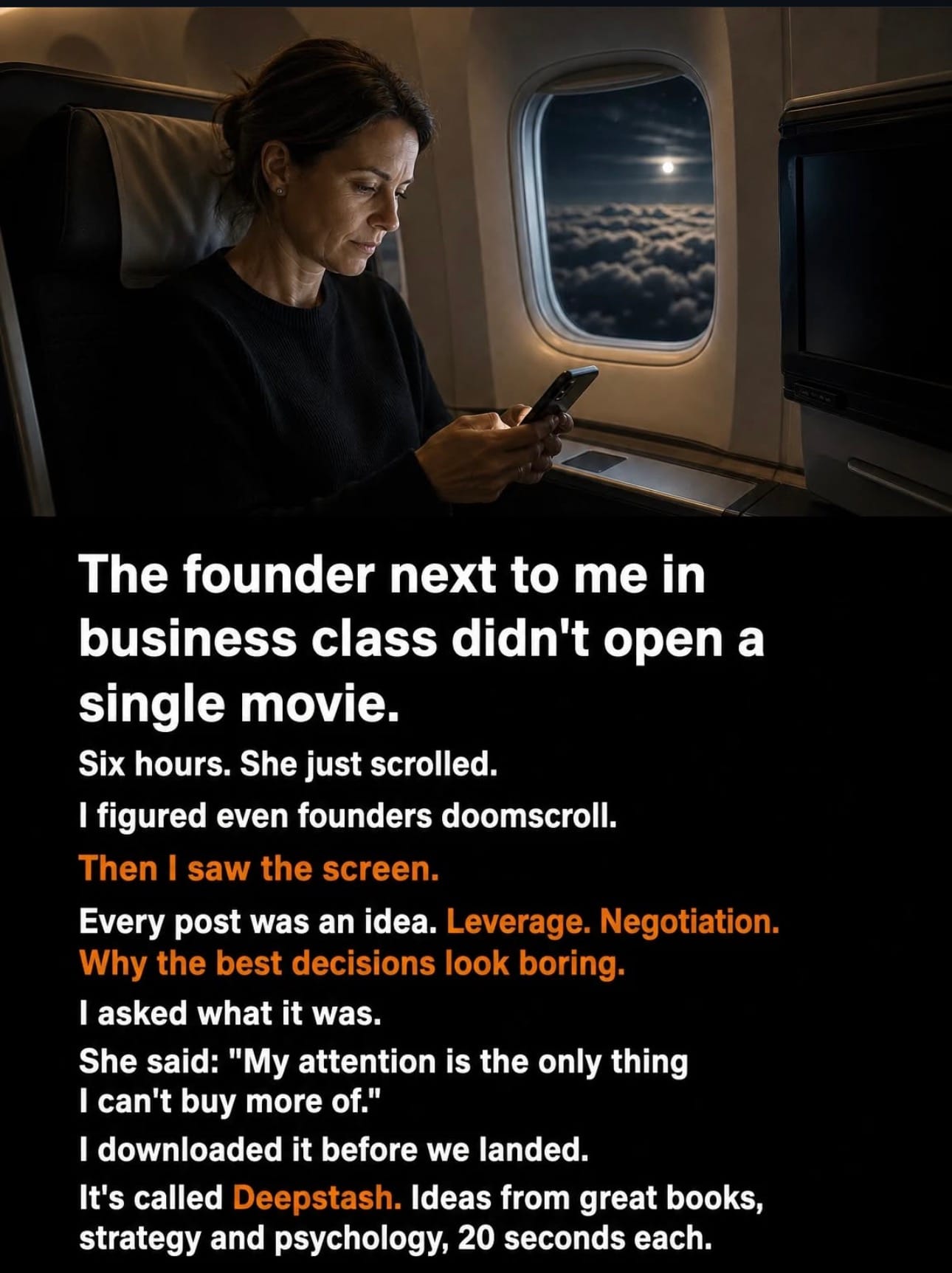
I saw the Deepstash app on sale, apparently 60% off, and signed up for it. It gives about ten key ideas from different business or productivity books. It only takes about 10 minutes to complete the lessons from each book. There is audio narration as well as simple screens.
I've currently finished six books and three are in progress. These include:
- Meditations by Marcus Aurelius.
- Dopamine detox by Thibaut Meurisse.
- Steve Jobs by Walter Isaacson.
- Mistakes were made but not by me Carol Tavris.
- Benjamin Franklin by Walter Isaacson.
- Naked Economics by Charles Wheelan. Atomic Habits by James Clear.
I do like that some of these curated key ideas might stick to you, maybe even influence you in a positive way.
However, I'm also a fan of buying actual books on Kindle, where you can highlight easily, or buying physical used books on sale.
The advantage of reading unabridged books is that the examples that might resonate with you or your life experiences will often be very different than the key ideas of the book...
Tell me via comments: Would you like me to write traditional book reviews of the books that I read and find useful?